Feeds:
Posts
Comments

Archive for the ‘energy policy’ Category

Elements Newsletter

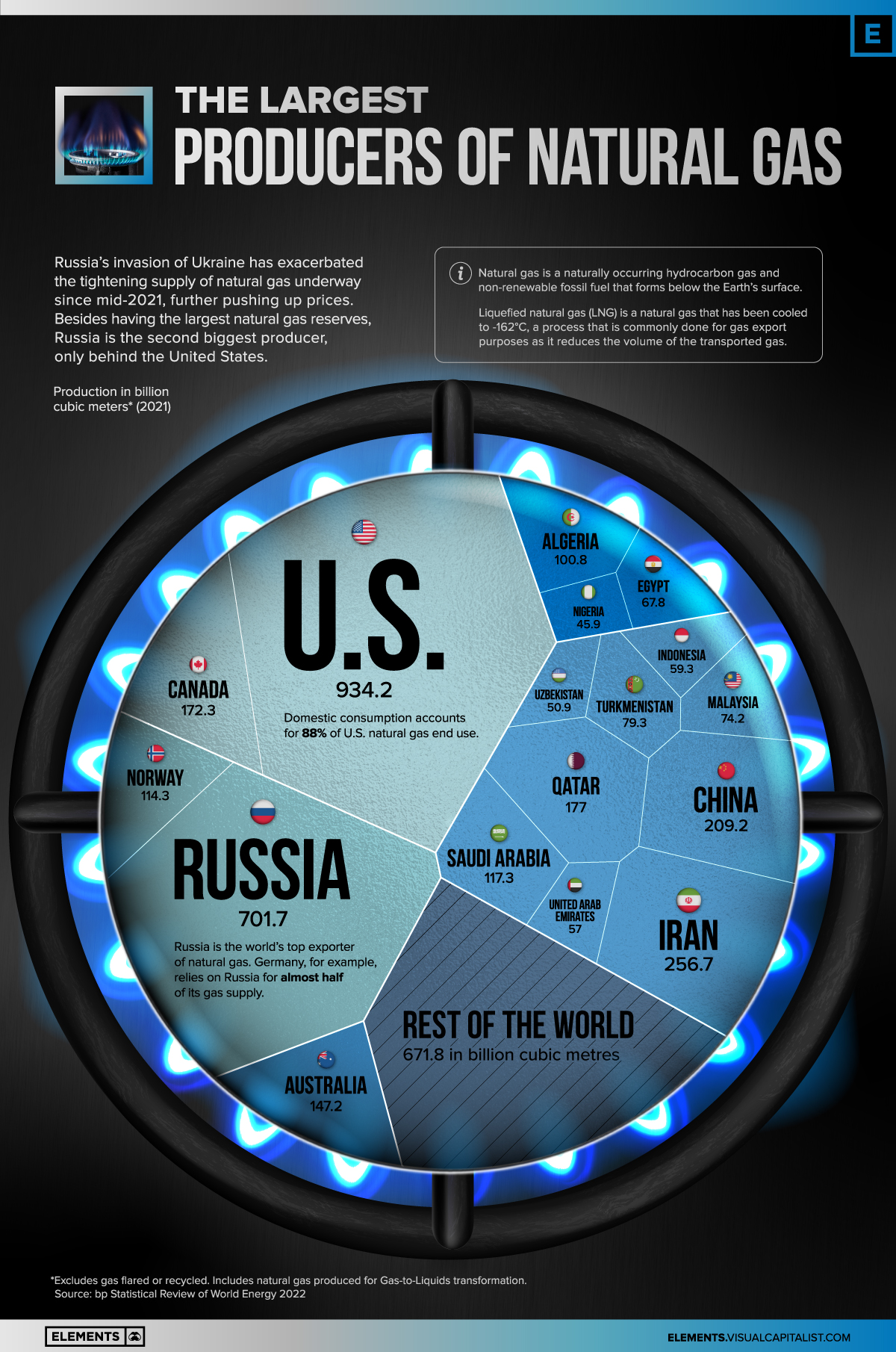
Where would we, and the world, be today without the shale gas revolution? 12.5 years after posting about this amazing success story, I’m still waiting for the national celebration!

For a reminder about the environmental advantages of natural gas in general, and nonassociated offshore gas in particular, see this post.

Read Full Post »

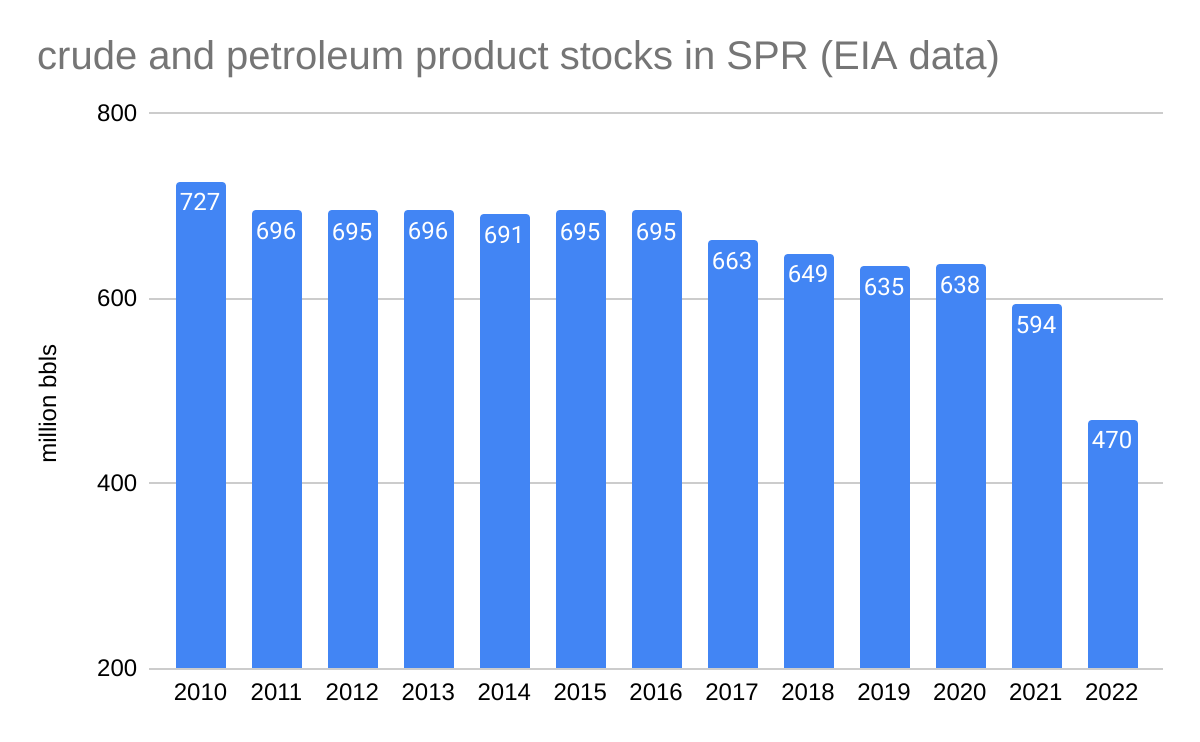
  • Largest-ever one year decline – 151.4 million bbl or 24.4% (see table below)
  • 35.3% decline since 2010 (see chart below)
  • 69 consecutive weeks of decline – 4/9/2021 to 7/29/2022
  • For the first time, broke the 500 million barrel threshold (on the downside): 6/24/2022
  • Lowest inventory since 5/17/1985 when the reserve was still being filled
7/30/2021621.3 million bbls 
7/29/2022469.9 million bbls
EIA data

Read Full Post »

The dashed red line outlines China’s claim. Needless to say, Brunei, Indonesia, Malaysia, the Philippines, Taiwan, and Vietnam differ with China’s creative interpretation.

Map Source: CENTER FOR STRATEGIC AND INTERNATIONAL STUDIES, PERMANENT COURT OF ARBITRATION

In recent years, satellite imagery has shown China’s increased efforts to reclaim land in the South China Sea by physically increasing the size of islands or creating new islands altogether. In addition to piling sand onto existing reefs, China has constructed ports, military installations, and airstrips—particularly in the Paracel and Spratly Islands, where it has twenty and seven outposts, respectively.

Global Conflict Tracker

Never mind that Beijing’s claims are fundamentally incompatible with established international law on maritime boundaries, the United Nations Convention on the Law of the Sea, which China has ratified and by which it professes to abide. Never mind, as well, that the claims have been ruled fraudulent by an international tribunal in The Hague.

ForeignPolicy.com

Read Full Post »

Tucked into the end of the nearly $370 billion deal struck last week by Senate Majority Leader Chuck Schumer (D-N.Y.) and Senate Energy and Natural Resources Chair Joe Manchin (D-W.Va.) is a requirement for the Interior Department to reinstate a massive 80 million-acre Gulf of Mexico lease sale that a federal judge blocked earlier this year for violating NEPA.

E&E News

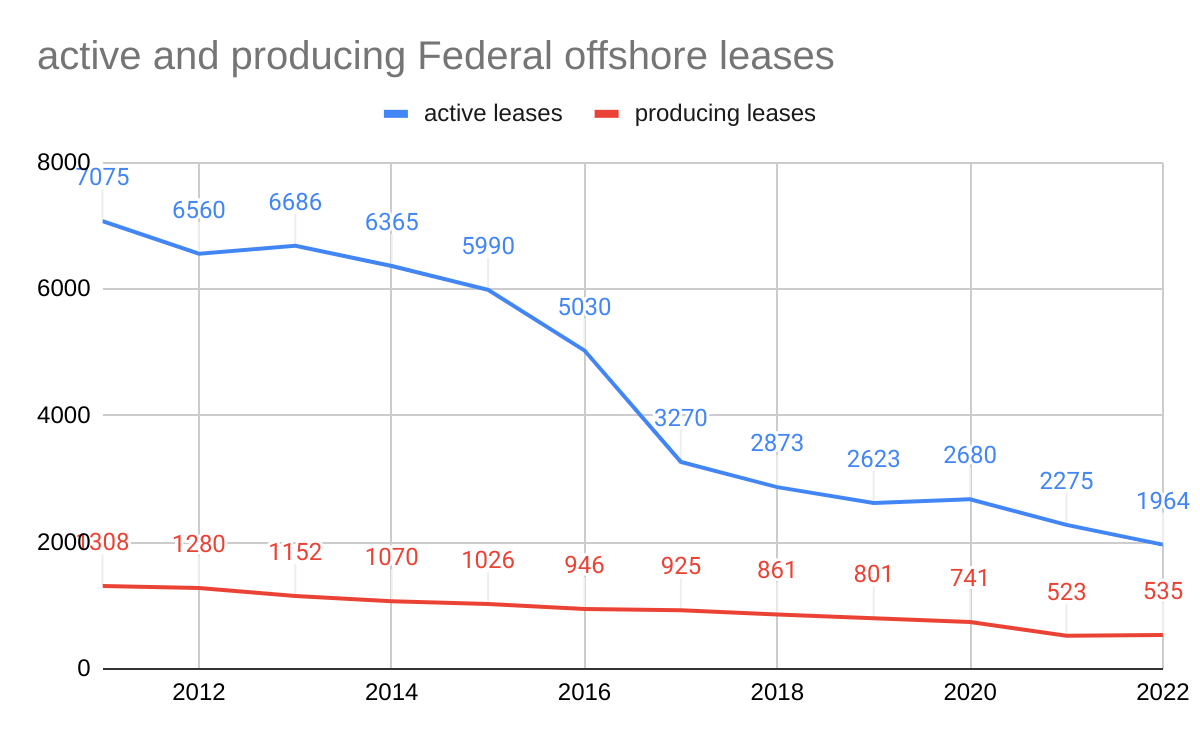
Tracts covering 1.7 million acres received bids at Lease Sale 257. 30.5% of those tracts received bids for CCS purposes, leaving about 1.2 million acres receiving bids for oil and gas exploration. Nonetheless, some continue to distort the magnitude of this rather ordinary lease sale. It’s also important to note that the number of active US offshore leases has declined by 72% since 2011, and is now under 2000 for the first time in decades.

Read Full Post »

Westwood has highlighted 13 wells planned for the remainder of 2022 as ‘key wells to watch’. These include a number of frontier play tests, for example Raia offshore Mozambique, and Pensacola, offshore UK; extensions of proven plays, including Zanderij offshore Suriname and Hoodoo, US Gulf of Mexico; and large prospects in proven plays, such as Wei, offshore Guyana.

Westwood

The Hoodoo prospect cited by Westwood is operated by BHP and is in East Breaks Blocks 699 and 700. At Sale 257 (11/17/2021), BHP was the sole bidder on 4 blocks just to the north of this prospect. The lease sale was vacated by a Federal judge in January. If the vacature of Sale 257 is not reversed, either by appeal or legislation, one or both of the following outcomes could easily occur:

  1. BHP loses the opportunity to potentially develop those blocks as part of or in conjunction with the Hoodoo project.
  2. Based on their knowledge of the BHP bids, which are public information, other companies could submit bids for these blocks in a future sale. BHP would have to defensively raise their bids or lose the blocks to another company.

Either outcome would be unfair to BHP and would discourage investment in OCS exploration and development.

Read Full Post »

WASHINGTON, D.C. — The Biden-Harris Administration, through the U.S. Department of Energy (DOE), today announced $26 million to fund projects that will demonstrate that America’s electricity grid can reliably run with a mix of solar, wind, energy storage, and other clean distributed energy resources.

DOE

Shouldn’t the research precede DOE’s declaration of victory?

Rest assured that none of the studies will question the reliability of a grid dependent on DOE’s preferred energy mix; nor will they raise concerns about the associated economic, national security, or environmental risks. These are the types of projects that the WSJ calls “Green Pork.”

Read Full Post »

Read Full Post »

The subject legislation requires the Secretary of the Interior to accept the highest valid bid that was received for each tract offered in OCS Lease Sale 257. Exxon was the sole bidder on 94 tracts on the nearshore Texas shelf. The leases were to be acquired for carbon sequestration purposes.

The CCS bids should not be considered valid given that:

  1. Sale 257 was an oil and gas lease sale. The Notice of Sale said nothing about carbon sequestration and did not offer the opportunity to acquire leases for that purpose. Therefore, the public notice requirements for CCS leasing (30 CFR § 556.308) were not fulfilled.
  2. Because there was no draft or final Notice of Sale, interested parties and the public did not have the opportunity to consider and comment on CCS leasing, tract exclusions, bidding parameters, and other factors.
  3. 30 CFR § 556.308 requires publication of a lease form. No CCS lease form was posted or published for comment.
  4. CCS operations were not considered in the environmental assessments conducted prior to the sale.
  5. No evaluation criteria for CCS bids have been published.

Unexpectedly, the Infrastructure Bill, signed on 11/15/2021 (just 2 days before Sale 257) included a provision for OCS carbon sequestration. However, that legislation did not require CCS leasing or authorize DOI to sell CCS leases as part of an oil and gas lease sale; nor did it exempt DOI from complying with its leasing regulations. Instead, It gave the Secretary a year (until 11/15/2022) to promulgate necessary implementing regulations. If carbon sequestration in the Gulf of Mexico is deemed to be desirable, a separate CCS sale should be held when the regulatory framework has been established.

Read Full Post »

When we (MMS) drafted the OCSLA amendments (incorporated into the Energy Policy Act of 2005) that authorized offshore wind operations, we envisioned complementary and synergistic programs. Offshore wind and oil/gas development have many similarities and a common purpose – energy production. There is considerable overlap among the operating companies and contractors.

Unfortunately, politicians are better at dividing than uniting, and a provision in the Schumer-Manchin legislation pits the offshore wind and oil/gas programs against each other. The text (pasted below) from p. 646 of the bill restricts wind leasing when no oil and gas lease sale has been held in the prior year.

I share the concerns about the OCS program evolving into a wind-only program, as has already happened in the Atlantic (more on this at a later date). However, oil and gas sales should be held because they make economic and environmental sense, not because they are a condition for holding wind sales. Oil and gas sales are not punishment and wind sales are not rewards, and holding a single GoM lease sale each year does not balance the offshore program.

(b) LIMITATION ON ISSUANCE OF CERTAIN LEASES OR RIGHTS-OF-WAY.—During the 10-year period beginning on the date of enactment of this Act—

(2) the Secretary may not issue a lease for offshore wind development under section 8(p)(1)(C) of the Outer Continental Shelf Lands Act (43 U.S.C.1337(p)(1)(C)) unless—
(A) an offshore lease sale has been held during the 1-year period ending on the date of the issuance of the lease for offshore wind development; and (B) the sum total of acres offered for lease in offshore lease sales during the 1-year period ending on the date of the issuance of the lease for offshore wind development is not less than 60,000,000 acres.

Read Full Post »
Here is a link to the entire bill. Good weekend reading for energy policy nerds. 😀

The energy sections begin on page 232 and continue until the end (page 725!). Some highlights from an offshore energy perspective (more important items in bold):

  • p. 429 – Tax credit eligibility for offshore wind energy components including blades, nacelles, foundations, and towers.
  • p. 447 – Credits for CCS equipment
  • p. 460 – For offshore wind facilities, this section specifies the % of the total costs that must be expended in the US for the facility to qualify as being manufactured in the US. That % rises gradually to 55% after 12/31/2027.
  • p. 518 – Eligibility of CCS for credits
  • p. 615 – $100 million for offshore wind electricity transmission planning, modelling, and analysis. (Seems like a lot for planning and analysis.)
  • p. 621 – $10 million for oversight by DOE Inspector General. (Those folks will have their hands full!)
  • p. 628 – Authorizes wind leasing in the EGOM and South Atlantic areas withdrawn from all leasing at the end of the Trump administration.
  • p. 631 – Authorizes offshore wind leasing adjacent to US territories. (Should be interesting!)
  • p. 632 – Codifies increase in offshore royalty rates: range of 16 2/3% – 18 3/4% for 10 years; not less than 16 2/3 % thereafter
  • p. 640 – The provision requiring that royalty be paid on flared/vented gas could be problematic. The exceptions are not consistent with those currently in the regulations, and would be difficult for BSEE/ONRR to manage. The proposed legislation (exception 1) exempts “gas vented or flared for not longer than 48 hours in an emergency situation that poses a danger to human health, safety, or the environment.” However, current BSEE regulations allow limited (48 hours cumulative) flaring for certain operations (e.g. during the unloading or cleaning of a well, drill-stem testing, production testing, and other well-evaluation testing). This flaring is essential but not normally an emergency situation. Requiring royalty payments for such essential, but not emergency, flaring would be unreasonable and inconsistent with the intent of this provision (minimize unnecessary flaring and venting).
  • p. 641 – Per our previous post, this section reinstates Lease Sale 257 (GoM) and requires that the scheduled 2022 lease sales 258 (GoM) and 259 (Cook Inlet) be held by 12/31/2022. Lease Sale 261 (GoM) must be held by 9/30/2023. Saddle up!

Read Full Post »

« Newer Posts - Older Posts »