Feeds:
Posts
Comments

Archive for January, 2025

Sec. 12(a) of the Outer Continental Shelf Lands Act (OCSLA, 43 U.S. Code § 1341(a)): “The President of the United States may, from time to time, withdraw from disposition any of the unleased lands of the outer Continental Shelf.”

As previously posted, the Sec. 12(a) authority has been cynically exercised by Presidents from both parties and should be repealed or revised.

Unsurprisingly, there are now reports that President Biden intends to permanently withdraw large areas of the OCS from leasing consideration before he leaves office in 2 weeks. Apparently, the leasing ban will include large segments of the Atlantic, Pacific, and the eastern Gulf of Mexico.

Sec. 12(a) facilitates (encourages?) rash, politically motivated decisions that could have major long-term implications for energy security and the economy, and allows Presidents to ignore the deliberate, multi-phase review and comment process that has been established for making leasing decisions.

Note that Presidents have exercised this authority seven times. In every case, the action was taken just prior to the end of the President’s term in office.

Questions:

  • Can a President reverse a Sec. 12(a) decision made by a predecessor? That is a massive legal question that has yet to be fully considered by the legal system.
  • Could legislative action reverse a Sec. 12(a) decision? Yes, but such legislative action would be difficult to enact (just as it would have been difficult for any of the Sec. 12(a) withdrawals to have been enacted legislatively).
  • Is a revision to Sec. 12(a) being considered? Not that I am aware of. Given that the authority has been exercised by both parties and that strong opposition is likely, a revision would be challenging.

Related:
Read Full Post »

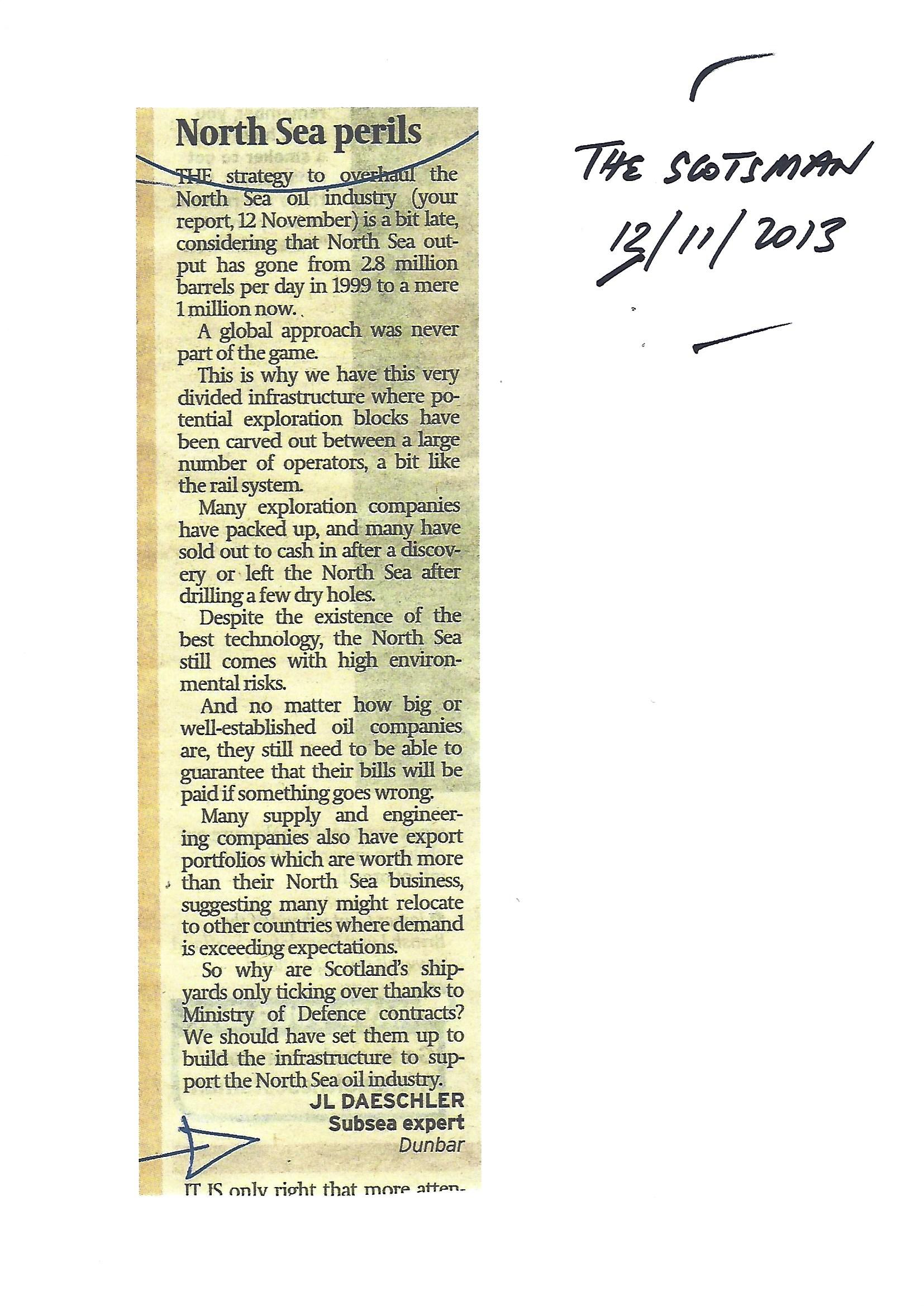
JL Daeschler, a BOE contributor, subsea engineer, and resident of Scotland, warned 11 years ago (see clip below) about the demise of North Sea infrastructure and the exit of important companies. JL now comments as follows:

“We have unfortunately taken down all the support facilities needed to conduct a complete offshore sequence – finding, engineering, and producing – even under a more favorable tax climate. We will have to call on Norway to do anything!”

Read Full Post »

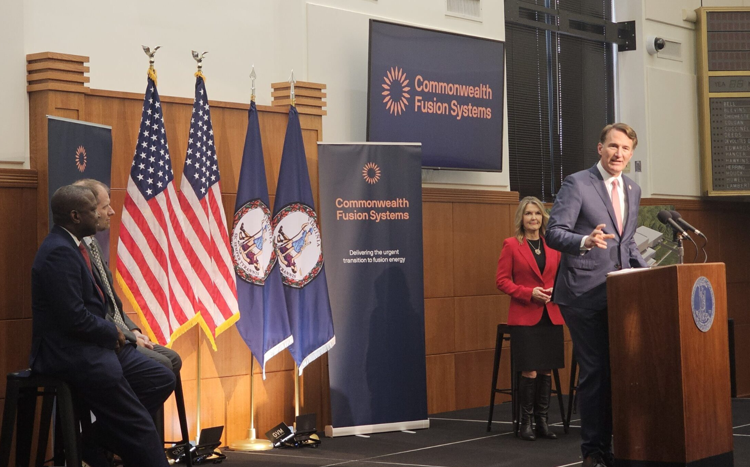
Virginia Mercury photo: Gov. Youngkin makes the announcement
  • Commonwealth Fusion Systems (CFS) will independently finance, build, own, and operate a grid-scale fusion power plant in Chesterfield County, Virginia.
  • Dominion Energy will provide non-financial collaboration, including development and technical expertise as well as leasing rights for the proposed site.
  • This pioneering plant will generate 400 MW of continuous energy on 25 acres (total site is 100 acres). By comparison, Dominion Energy’s offshore wind project, which will include 176 turbines and 3 offshore substations, will intermittently produce (on average) 1092 MW (2600 MW x 0.42 capacity factor).
  • Gov. Youngkin emphasized that the project will be financed entirely by CFS, with no costs passed on to Dominion Energy ratepayers. (Good news for us Dominion Energy customers! 😀)
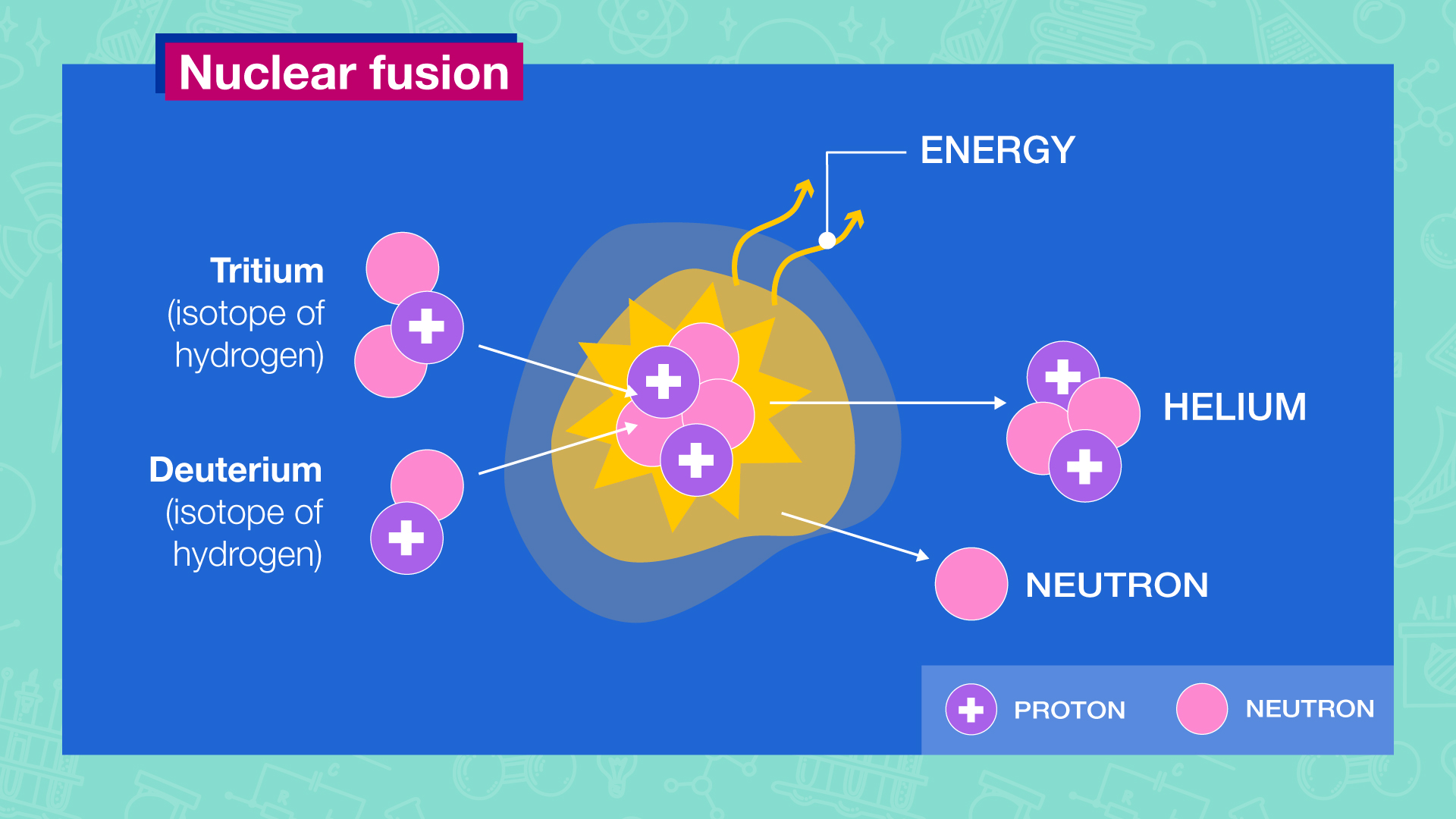
Fusion technology works by combining hydrogen isotopes — deuterium extracted from water and tritium from lithium — under extreme heat and pressure, using powerful magnets to fuse the elements. The process generates heat, which boils water to create steam that spins a turbine, producing electricity. The byproduct is helium.

Why BOE, and most everyone else, likes nuclear fusion:

  • Clean and sustainable power source.
  • Unlike traditional nuclear power plants that rely on fission, fusion replicates the energy-producing process of the sun.
  • Modest space requirements.
  • Generates four times more energy per kilogram of fuel than fission and nearly four million times more energy than burning oil or coal.
  • No radioactive waste
  • Safe energy source; no risk of a meltdown event
  • Nuclear Regulatory Commission has determined that fusion technology, unlike fission, does not require a federal license.

Tempering the optimism a bit, the plant won’t be operational until the early 2030’s. As we all know, there could (will likely) be delays. CFS is currently building a demonstration plant in Massachusetts that will use their SPARC “tokamok” technology.

The implications of advanced nuclear technology, not only the holy grail of fusion energy, but also modular fission reactors, for intermittent wind and solar power are substantial. Ultradeep geothermal is on a similar timeframe, and could also supersede wind and solar.

The logic behind costly offshore wind projects is therefore questionable, and the regulators better make sure that the decommissioning of these facilities is fully funded. The most likely long-term scenario is for natural gas to continue meeting most power generation needs as the nuclear and ultradeep geothermal alternatives are phased in.

More about fusion. Most of you can start at Level 3. 😉

Read Full Post »

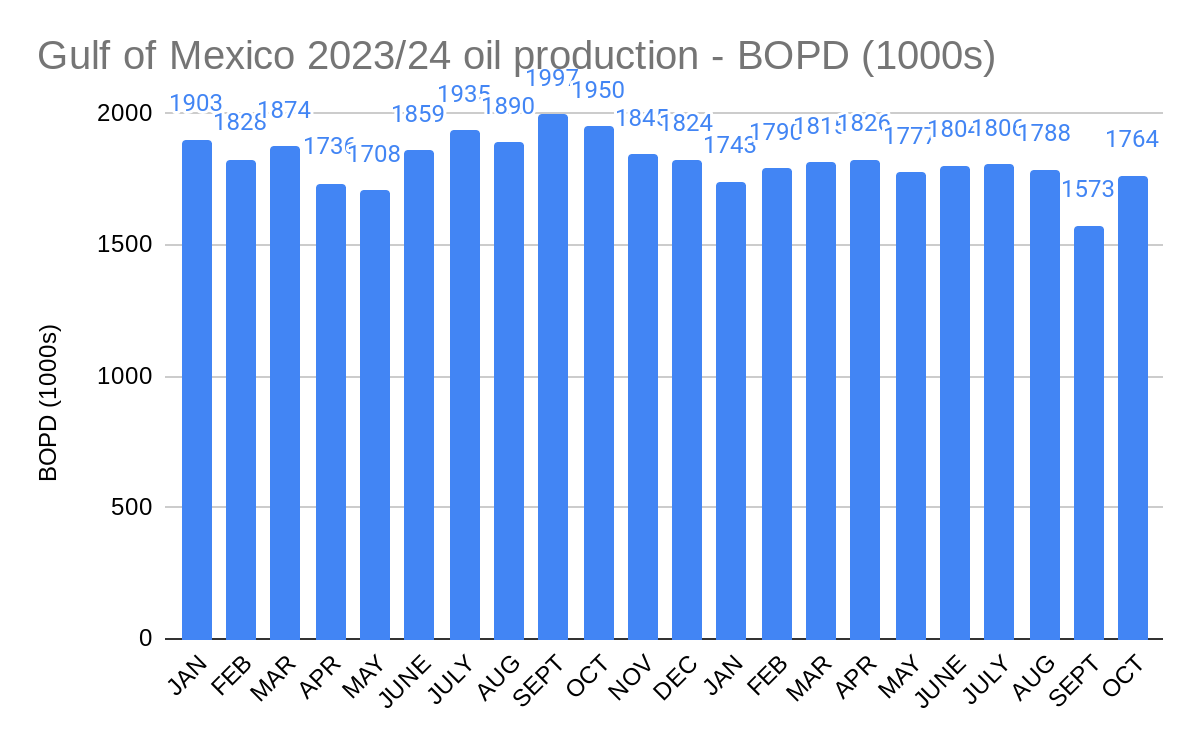
Following the 200,000 bopd decline in Sept. because of Tropical Storms Francine and Helene, Oct. GoM oil production was once again in the normal range for 2024. With the exception of Sept., average 2024 production has been remarkably consistent from month to month.

Read Full Post »

« Newer Posts