Feeds:
Posts
Comments

Archive for December, 2021

What, if anything, will the Judge say about the leases that are intended to be carbon sequestration sites? How can BOEM sell OCS leases for purposes that were neither announced nor environmentally assessed? What do EarthJustice and the other plaintiffs think about the sequestration bids given that the environmental community is split on CCS?

Who is going to pay the enormous cost of sequestration on the Outer Continental Shelf – platforms, wells, pipelines, processing equipment, maintenance, monitoring, decommissioning, and more? The Federal government (i.e. taxpayers) features large in this grand scheme, and will no doubt be assuming most of the economic and performance risks. And all of these costs are for disposal purposes, not for offshore energy production of any kind.

Together with the bipartisan infrastructure bill enacted in November, which included more than $12 billion in funding for carbon capture and carbon removal technologies, the Build Back Better legislation would hand fossil fuel companies nearly every item on their carbon capture wishlist.

Inside Climate News

The reality of offshore CCS is not anywhere near as simple as portrayed in the slick graphic below:

houston ccs hub
ExxonMobil

Read Full Post »

C:\Users\Owner\Pictures\Hudson Canyon Test.jpg

More than 43 years ago, natural gas was discovered in the Atlantic about 100 miles SE of Atlantic City. The prospect was unitized (Hudson Canyon Unit) and 7 additional wells were drilled over the next 3 years. 725 miles of 3-D seismic data were collected. The geology was complex and more time was needed to evaluate the data. MMS refused to extend the leases without further drilling activity. One unit partner committed to funding a confirmation well if the other companies would relinquish their interest. They would not and the leases expired in 1984. This Hudson Canyon “end game” reflected poorly on the unit partners and the regulator, and the opportunity to produce regionally significant quantities of natural gas was forever lost. Seemed petty then; seems petty now.

Read Full Post »

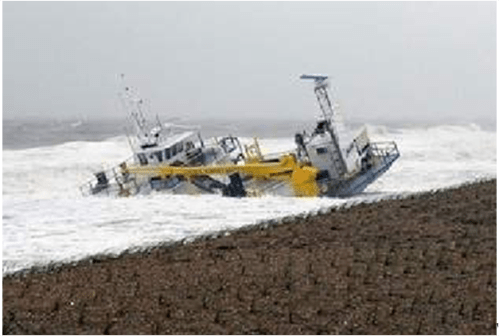
The vessel was conducting research for a proposed offshore wind project. The Coast Guard rescued the 2 crew members, one of whom tragically died. Why has the Coast Guard still not issued an investigation report more than 13 years after the incident? An inquiry was sent to the Coast Guard but no response has been received.

There are serious questions regarding the positioning of a liftboat in the Mid-Atlantic for several months beginning in March when major storms are likely. There are also important questions about the liftboat’s failure mechanisms, the operator’s authority to be conducting this research, and the actions that were taken in preparation for storm conditions.

One worker died and another was seriously endangered. 13 years after the incident, we are still wondering what happened and why.

Read Full Post »

Dan starts by retelling the story about the North Face hypocrisy that earned the company the Colorado Oil and Gas Association’s first ever Customer Appreciation Award for being an extraordinary oil and gas customer. This award rivals the Not My Job Award as a means of recognizing extraordinary individual and organizational chutzpah. North Face refused to sell jackets to an oil industry service company because doing so would be counter to its “goals and commitments surrounding sustainability and environmental protection.” As the Colorado Oil and Gas Assoc. pointed out:

At least 90 percent of the materials in North Face jackets are made from petrochemicals derived from oil and natural gas. Moreover, many of its jackets and the materials that go into them are made in countries such as China, Vietnam, and Bangladesh, and then shipped to the United States in vessels that are powered by oil. To muddy matters further, not long before North Face rejected the request, its corporate owner had built a new hangar at a Denver airport for its corporate jets, all of which run on jet fuel. 

Yergin in The Atlantic

Yergin goes on to point out the extraordinary complexities of energy transitions particularly for developing nations:

Aissatou Sophie Gladima, the energy minister of Senegal, put it more pithily: Restricting lending for oil and gas development, she said, “is like removing the ladder and asking us to jump or fly.”

Yergin in The Atlantic

He talks about other energy transitions:

The 19th century is known as the “century of coal,” but, as the technology scholar Vaclav Smil has noted, not until the beginning of the 20th century did coal actually overtake wood as the world’s No. 1 energy source. Moreover, past energy transitions have also been “energy additions”—one source atop another. Oil, discovered in 1859, did not surpass coal as the world’s primary energy source until the 1960s, yet today the world uses almost three times as much coal as it did in the ’60s.

Yergin in The Atlantic

Read Full Post »

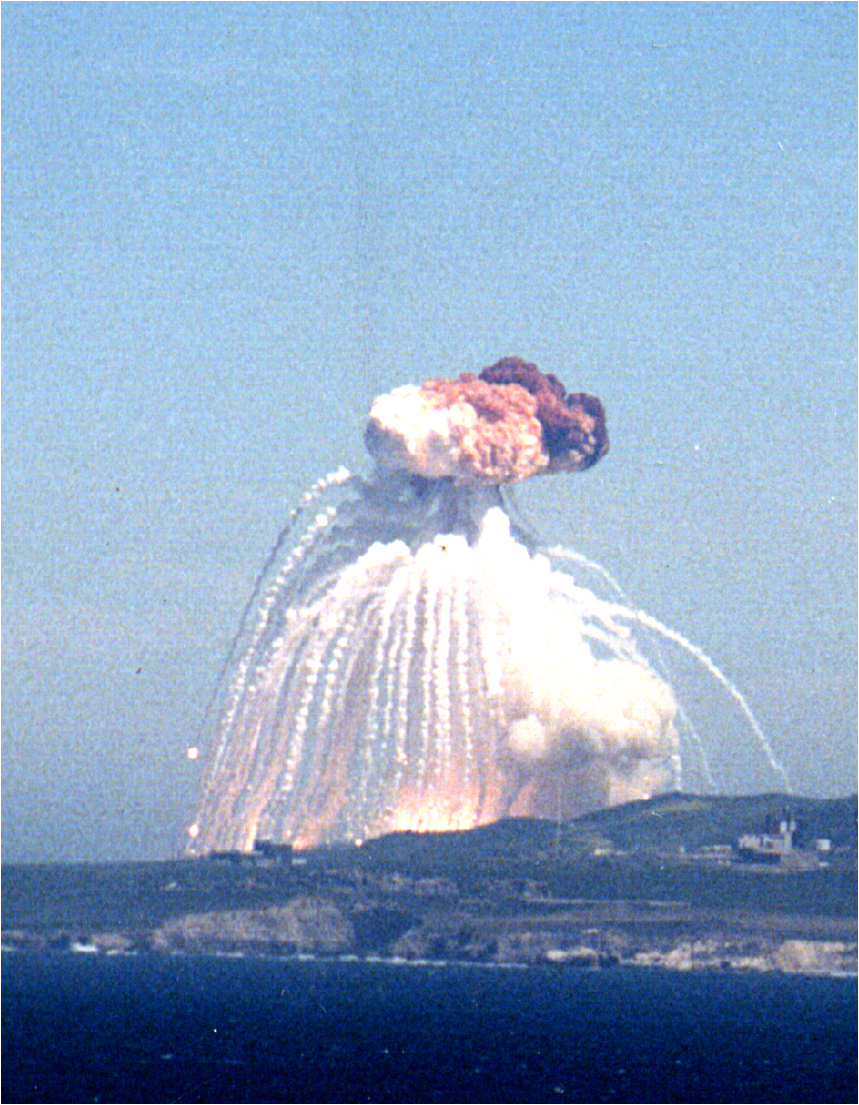
Last week’s successful Falcon 9 launch from Vandenberg Space Force Base (formerly Air Force Base) brought back memories of a less successful Vandenberg launch on April 18, 1986. I was just offshore from the base on Texaco’s Platform Harvest at the time. That is where the photo below was taken.

The Titan rocket carrying a secret spy satellite exploded in a huge orange cloud seconds after the launch. Because this was a classified mission, few residents knew that a launch was occurring. Fifty-eight people were treated for skin and eye irritation. Not a shining moment for the space program, particularly given the Titan failure the previous August and the tragic Challenger disaster earlier in 1986.

Photo taken from Texaco’s Platform Harvest
New York Times archive

Read Full Post »

« Newer Posts