Feeds:
Posts
Comments

Archive for March, 2010

Mr. Howe, I salute you.  You are providing a great service for responsible offshore operators, contractors, and regulators worldwide.

These transcripts should be mandatory reading for everyone involved with offshore safety and all petroleum engineering students.  More to follow.

Read Full Post »

THE COMMISSIONER: Mr Howe, before you start, let me remind the people in the Commission that if I say I’m starting at 11.20, I mean to start at 11.20.

Amen Commissioner Borthwick!

David Gouldin, Operations Manager for Seadrill Limited (Atlas), was today’s witness.  The transcript is a very interesting read for us operations, regulatory, and safety geeks.  Featured topics included licensee-contractor relationships and responsibilities, what constitutes a barrier in the casing, measuring pressure beneath a corrosion cap, and the root cause cementing and well integrity issues.  Particularly interesting were the discussions about authority and accountability.   In US waters, the lessee/operator is the responsible party for all oil and gas activities on a lease.  This accountability is well established.  This does not appear to be the case in Australia, and Mr. Howe, Counsel for the Inquiry (I continue to be impressed by his preparation and questioning)  suggested “one way of perhaps addressing that is to make it absolutely clear that the licensee can’t outsource safety and ultimate control to anyone.”  I fully agree with that sentiment.  One party must be accountable and that party should be the licensee.

Read Full Post »

Fortunately, no human life was lost. However, the implications and consequences of the blowout are broad and wide ranging, including for the environment, for the petroleum industry and the Australian system of regulation of offshore petroleum operations – Tom Howe, Counsel for the Inquiry

Firstly, kudos to the Commission for promptly posting the hearings transcript.  Because of a change in schedule, the only speakers were two attorneys for the Inquiry Commission – Tom Howe and Andrew Berger.  A  senior representative of Atlas, the drilling contractor, is scheduled to testify tomorrow.

Observations from Day 1:

  1. The Commission appears to have carefully reviewed the submissions and seems to be well prepared for the hearings.
  2. From a regulatory perspective, this comment from Mr. Howe was particularly interesting: “The preliminary view of counsel assisting is that in relation to matters of wellhead integrity, a greater level of prescription may be necessary to ensure compliance with the apparently nebulous concept of ‘good oilfield practice’.”  I fully agree with this comment.  No matter what type of regulatory regime is in place, best industry practices should be clearly identified and companies should be legally obligated to conduct their operations in accordance with such practices.
  3. Quoting Mr. Berger: “one area of concern to counsel assisting is that PTTEP applied to suspend the H1 well using a … pressure corrosion cap instead of a cement plug as a barrier, this approval appears to have been granted in precisely 30 minutes.”   In a command-and-control type of regulatory regime,  the regulator has to be available and able to make timely decisions.  However, absent compelling justification, deviations from accepted practices should never be made in this manner.
  4. There were no surprises with regard to previously reported cementing problems.  However, according to Mr. Howe, both
    PTT and Atlas now accept that the failure to conduct a pressure integrity test after cementing the 9 5/8″ casing was a root cause of the subsequent blowout.
  5. I am puzzled by this statement from Mr. Howe: “As we understand it, PTT now accepts that PTT personnel on the West Atlas rig should have been alert to risks associated with cementing of the casing shoe and should have been more forthcoming when assistance was sought about the problem from PTT personnel located on shore.”  Is PTT (PTTEP) management trying to distance itself from the problem, reduce its liability, and pass the buck to the rig crew?  What a surprise! (sarcasm intended)
  6. More internal PTT finger pointing with regard to the missing PCC (corrosion cap): “PTT personnel on shore had been told in writing by PTT personnel on the rig that the PCC had been installed.”
  7. Good job by the two speakers for the Commission of Inquiry.

Looking forward to hearing the Atlas testimony tomorrow.

Read Full Post »

Montara Blowout

Montara Blowout, TImor Sea

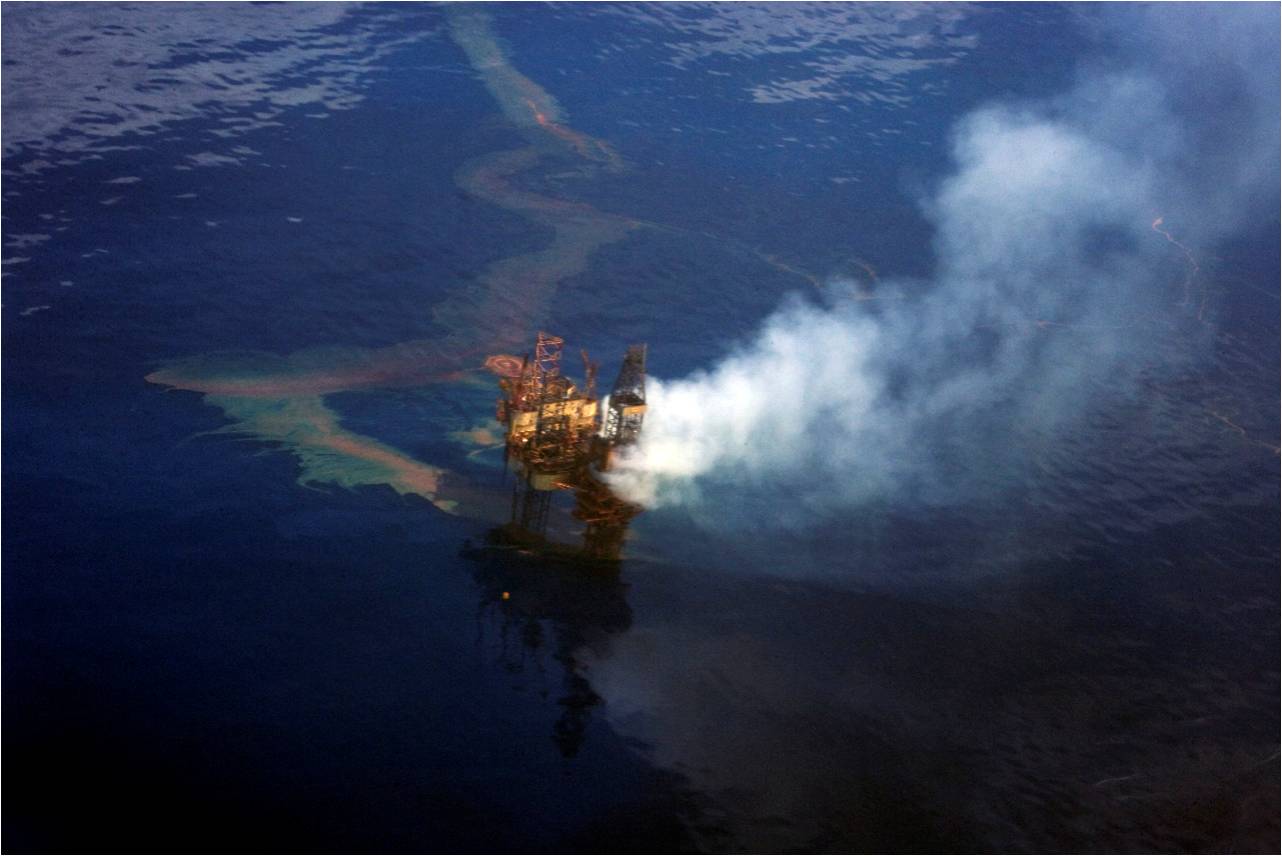
The Australian Commission that is investigating the 2009 Montara blowout in the Timor Sea will begin hearing testimony today (15 March) in Canberra.  According to the Commission’s website, the first witness will be a contract drilling supervisor.  It does not appear that the hearings will be televised or streamed online.  However, the guidelines indicate that the “transcript of the hearing will, subject to any confidentiality orders made, be placed on the Inquiry’s website as soon as it is available.” We are awaiting the testimony with great interest.

Read Full Post »

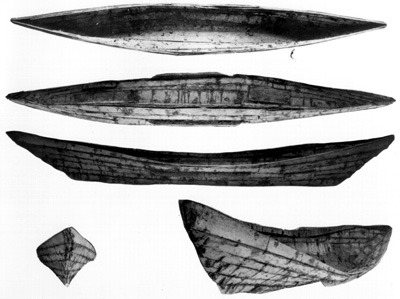
canoe caulked with asphaltum from natural seeps

The first consumers of petroleum used oil that seeped to the surface naturally.  Native Americans in California used petroleum seepage to caulk their canoes.  Marco Polo witnessed oil being recovered from seeps in 1264 in Baku (then part of Persia).
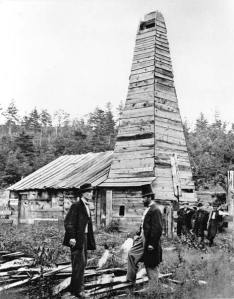
Drake Well, 1859, Titusville, PA

Natural seeps helped Colonel Drake target the first commercial oil well in the U.S. (Titusville, PA, 1859).  The amount of oil that seeps to the earth’s surface is surprisingly high.  In fact, a Norwegian Petroleum Directorate article on natural seeps estimates that “at least 1/3 of all oil formed below ground escapes to the surface as seepage.”

Natural seepage has increasingly factored into the offshore drilling debate.  The MMS Oil Spill Fact Sheet notes that “natural seeps introduce 150 times more oil into U.S. marine waters than do OCS oil and gas activities.” These data are intended to provide context, not to downplay the significance of drilling and production spills.  A large spill is an undesirable event at the location where it occurs,  regardless of how the spill’s volume compares with  regional, national, or international seepage totals.

Natural Seeps, Coal Oil Point

A California advocacy group, Stop Oil Seeps, has taken the “seep argument” a step farther by promoting  offshore production as a means of reducing natural seepage and the associated air and water pollution.

While SOS’s position is interesting and perhaps justified for areas like Coal Oil Point (Santa Barbara Channel),  not all production prevents or reduces seepage.  Offshore oil and gas seepage results when hydrocarbon-bearing formations are exposed to the sea floor either directly or via fractured or permeable overlying sediments.  Where such conditions do not exist, oil and gas production will not reduce seepage.  SOS’s enthusiastic support for California offshore production is refreshing, but advocates should exercise caution in making claims regarding seepage reduction.  Prospects for seepage reduction from offshore production range from highly likely (Platform Holly and Coal Oil Point) to highly unlikely (deep formations protected with impermeable cap rock).

While we applaud their enthusiastic support for offshore production, the SOS plan raises a number of questions:

  1. Is SOS suggesting that offshore production only be allowed if such production will reduce seepage?
  2. How much can offshore production reduce overall seepage in the region?  Is it cost-effective and feasible to achieve significant, long-term reductions in seepage that has existed for thousands of years?
  3. If the objective is to produce oil and gas, and generate the associated revenues, why not say that straight away?  Why is seep reduction necessary to justify responsible offshore production?
  4. Since the resources of the OCS are owned by all Americans, how does California justify “negotiating to retain the full fees and royalties for federal OCS leases and production revenue.”  Should Louisiana, Texas, Alaska, and other states also receive all fees and royalties for production from Federal waters?  Should these payments be retroactive?  Should states also receive all royalties and fees for wind and hydrokinetic energy produced in Federal waters?

While Platform Holly may be a negative spillage facility  (i.e. Holly’s seep reduction may significantly exceed the platform’s production spillage), this type of seepage reduction has not been demonstrated at other platforms.  Decisions on offshore exploration and development should be driven by the economic, energy security, and environmental benefits.  To the extent that production reduces natural seepage, all the better.  However, seepage reduction is not a primary reason for producing offshore oil and gas.

Read Full Post »
The Florida Legislature may soon decide whether to lift the 20 year ban on oil and gas exploration and production in State waters.

As part of  the review process, the State has prepared a list of questions on the management and regulation of offshore oil and gas resources.   Responses to these questions will help define the general terms of the regulatory regime that the State would follow if the ban is lifted.

The State is inviting input on any or all of the questions.  Please email your responses to adam.blalock@myfloridahouse.gov by the close of business on Monday, March 15.  Response should be limited to no more than 500 words per question.

Read Full Post »

The case for increasing production offshore California is relatively straightforward:

  1. The oil is there and production could be increased relatively quickly.
  2. Because of existing infrastructure and advances in extended reach drilling technology, additional offshore facility needs would be minimal.
  3. The safety and environmental record, while not perfect, has been exceptional.  (Opponents and supporters of California offshore production should fully agree on one point: We must never forget the 1969 blowout, and must challenge operating practices that make these type of incidents possible.)
  4. An effective regulatory regime is in place.
  5. Both the State and Federal governments need the revenue.
  6. Importing 50+% of our petroleum is detrimental to our economy and has significant national security implications.
  7. 25 years of offshore leasing moratoria demonstrated that you don’t reduce domestic consumption by restricting domestic production.
  8. Because of common infrastructure and support service needs, offshore oil and gas operations are complementary to (and may accelerate) wind and hydrokinetic energy development.

Read Full Post »

« Newer Posts