Feeds:
Posts
Comments

Posts Tagged ‘Sec. 12(a)’

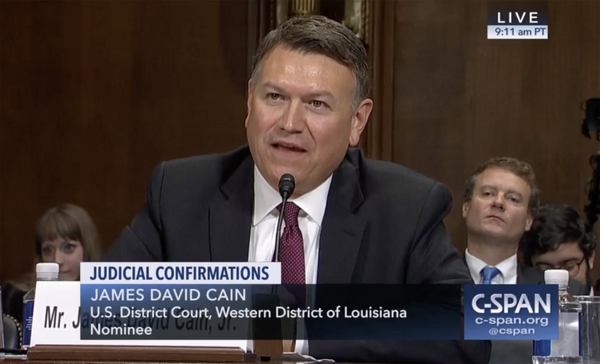
On Friday (10/3/2025), Judge Cain found that President Biden exceeded his authority under Section 12(a) of the Outer Continental Shelf Lands Act (OCSLA) by attempting to permanently withdraw large areas of the OCS from future oil and gas leasing. The Biden withdrawals, executed in his final days in office (by autopen?), resulted in the largest ever permanent ban on offshore oil and gas leasing in the US, and to the best of my knowledge, anywhere in the world (see link for details on the ban).

Although President Trump rescinded Biden’s action via executive order on January 21, 2025, the court proceeded with the case, acknowledging the high likelihood of similar actions in the future.

Judge Cain concluded that Biden departed from historical executive practice and exceeded statutory limits under OCSLA Section 12(a), which allows the president to “withdraw from disposition any of the unleased lands of the outer Continental Shelf,” but does not explicitly authorize permanent or irrevocable bans.

The judge emphasized that prior withdrawals were typically temporary or modifiable, and attempts to make them permanent encroached on congressional powers.

Judge Cain extended the ruling to Obama’s extensive end-of-term withdrawals in 2016, finding them similarly unlawful for intending permanence.

The ruling reinforces that OCSLA withdrawals must be revocable by future presidents, limiting executive power to bind successors on public lands disposition. The ruling should prevent future reliance on leasing bans.

Judge Cain’s decision is important because leasing bans should be carefully considered and should not be executed casually at the end of a term for purely political purposes. 

Read Full Post »

The attached bill not only nullifies most OCS leasing bans, but fundamentally changes the OCS Lands Act provision (Sec. 12(a)) that authorizes such Presidential withdrawals.

The well constructed bill addresses the issues previously raised on the blog. The bill would:

  • Revoke all Presidential leasing bans except for the 2020 withdrawals, which could presumably be reversed by President Trump.
  • Limit withdrawals to under 150,000 acres (the equivalent of 26 lease blocks of typical size) in total or contiguous with any other withdrawal.
  • Limit cumulative withdrawals to 500,000 acres (87 lease blocks) without congressional approval.
  • Sunset withdrawals after 20 years.
  • Require geological, economic, and security assessments for any future withdrawals.
  • Give Congress the authority to review and potentially overturn future withdrawals.
  • Ensure that future withdrawals do not contradict an approved Five-Year Offshore Oil and Gas Leasing Program.

Does this bill have a chance? Realistically, the prospects are probably not good. Although the bill currently has an impressive list of 24 sponsors, all are Republicans and none are from Florida. Absent support from Florida Republicans and some interior state Democrats, it will be difficult to gain traction.

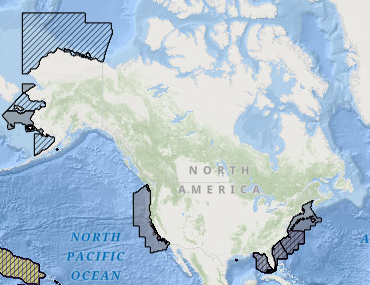
Interactive map showing OCS areas where oil and gas leasing is now prohibited (I.e everywhere but the Central and Western Gulf of Mexico and the Cook Inlet)

Read Full Post »

As expected, the White House announced the largest ever permanent ban on offshore oil and gas leasing in the US, and to the best of my knowledge, anywhere in the world.

The sheer magnitude of the ban makes other such withdrawals appear modest by comparison. It’s amazing how bold Presidents (and their handlers) become when they are about to leave office.

The permanent ban includes:

  • The entire Atlantic Outer Continental Shelf (OCS): While there are no current oil and gas leases in the US Atlantic, the region is highly prospective and could contain more than 20 billion barrels of oil equivalent (BOE).
  • The Eastern Gulf of Mexico: This is the OCS area that many petroleum geologists find most attractive. The best prospects are >100 miles from shore which minimizes coastal risks, and the high natural gas potential aligns with Florida legislation supporting the use of gas for power generation.
  • The entire Pacific OCS: While the resources are substantial, their loss has been a foregone conclusion for 25 years. When you can’t even decommission old platforms or restore production on important existing facilities (i.e. the Santa Ynez Unit), how can you possibly expect to issue new leases?
  • The remainder of the OCS offshore western Alaska. The wishes of the majority of Alaskans, who support offshore exploration and development, have been largely ignored for decades.

President-elect Trump has vowed to reverse President Biden’s leasing ban, but that may not be so easy. This is not a matter of simply reversing an executive order. Sec. 12(a) of OCSLA grants the authority to withdraw lands to the President and does not provide for reversal by future Presidents. The attached NYU Law brief concludes that “a subsequent president lacks authority to restore previously withdrawn lands to the federal oil and gas leasing inventory.”

The new Administration will no doubt have a different view than that expressed in the NYU Law brief, but any reversal decision will likely be challenged in court.

Those who wrote and approved Sec. 12(a) should have had more foresight. However, 72 years ago the authors presumably thought Presidents would only use the authority to remove small, especially sensitive areas from leasing consideration, and never thought that a President would remove both of our oceans and much of the Gulf of Mexico!

Congress could of course reverse the Biden bans, but given the complexity of offshore energy issues, such legislation may be difficult to pass.

Read Full Post »

Sec. 12(a) of the Outer Continental Shelf Lands Act (OCSLA, 43 U.S. Code § 1341(a)): “The President of the United States may, from time to time, withdraw from disposition any of the unleased lands of the outer Continental Shelf.”

As previously posted, the Sec. 12(a) authority has been cynically exercised by Presidents from both parties and should be repealed or revised.

Unsurprisingly, there are now reports that President Biden intends to permanently withdraw large areas of the OCS from leasing consideration before he leaves office in 2 weeks. Apparently, the leasing ban will include large segments of the Atlantic, Pacific, and the eastern Gulf of Mexico.

Sec. 12(a) facilitates (encourages?) rash, politically motivated decisions that could have major long-term implications for energy security and the economy, and allows Presidents to ignore the deliberate, multi-phase review and comment process that has been established for making leasing decisions.

Note that Presidents have exercised this authority seven times. In every case, the action was taken just prior to the end of the President’s term in office.

Questions:

  • Can a President reverse a Sec. 12(a) decision made by a predecessor? That is a massive legal question that has yet to be fully considered by the legal system.
  • Could legislative action reverse a Sec. 12(a) decision? Yes, but such legislative action would be difficult to enact (just as it would have been difficult for any of the Sec. 12(a) withdrawals to have been enacted legislatively).
  • Is a revision to Sec. 12(a) being considered? Not that I am aware of. Given that the authority has been exercised by both parties and that strong opposition is likely, a revision would be challenging.

Related:

Read Full Post »

Sec. 12(a) of OCSLA (43 U.S. Code § 1341(a)): “The President of the United States may, from time to time, withdraw from disposition any of the unleased lands of the outer Continental Shelf.”

The language “from time to time” implies that withdrawing OCS lands from oil and gas leasing consideration is a casual exercise at the whim of the President for any particular reason. That is indeed how the provision has been implemented.

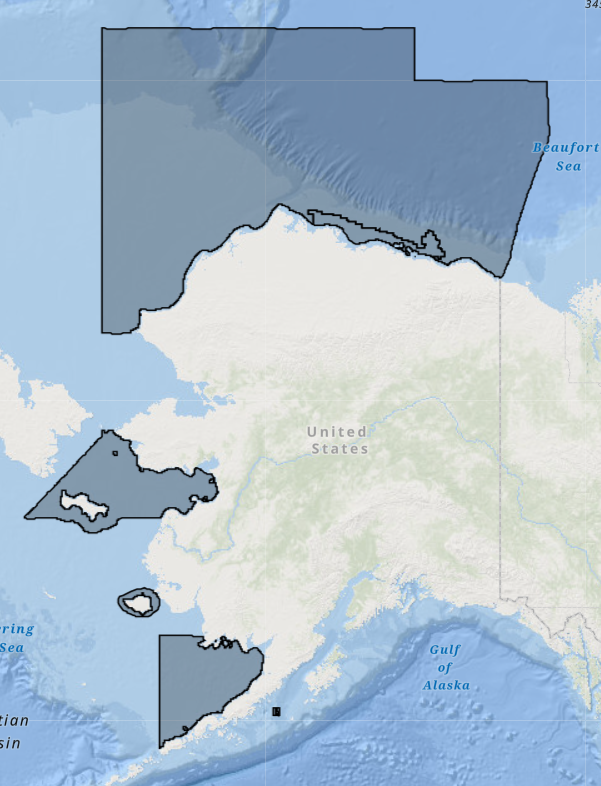
Alaska Presidential withdrawals are shaded (BOEM map)
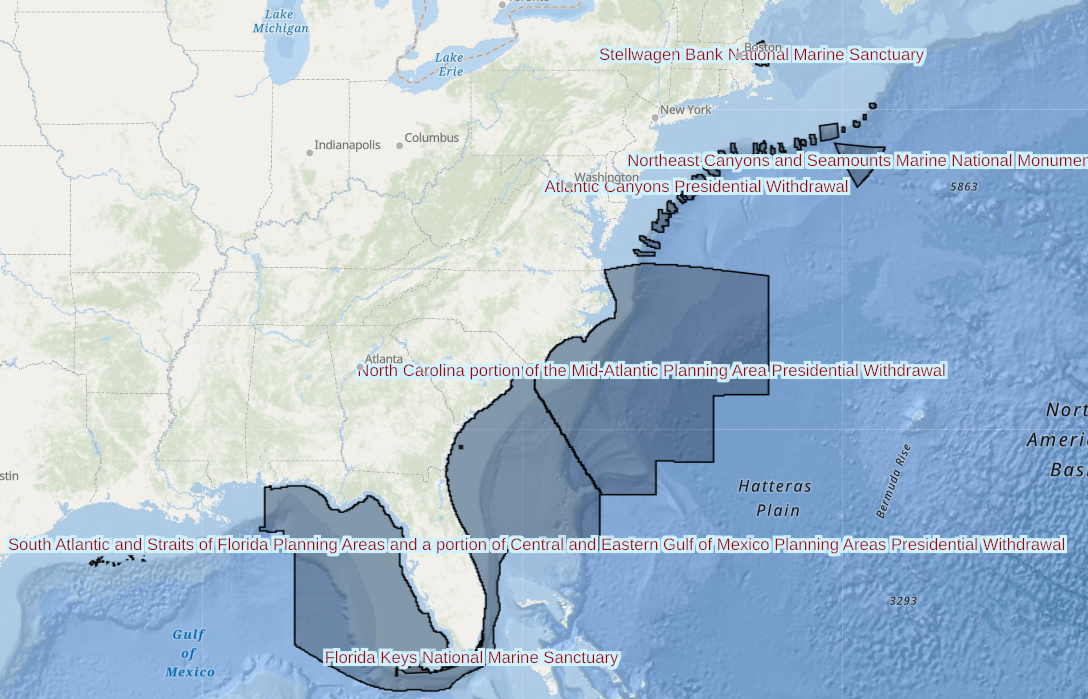
Atlantic and GoM withdrawals are shaded (BOEM map)

Over the last 8 years, Presidents Obama, Trump, and Biden have unilaterally exercised this authority without prior notice or opportunity for public comment. Their actions were timed to extend oil and gas leasing prohibitions well beyond their term in office (perhaps permanently), seek an edge in an upcoming election, or sacrifice OCS leasing in an attempt to placate opponents of another executive decision. More specifically:

In light of the rather cynical abuses of this authority and their potential economic and national security implications, Congress should consider repealing Sec. 12(a) of OCSLA or revising the language to limit the timing, scope, and duration of such withdrawals, and establish a process that prevents the withdraw of lands without fully considering the potential implications.

Read Full Post »