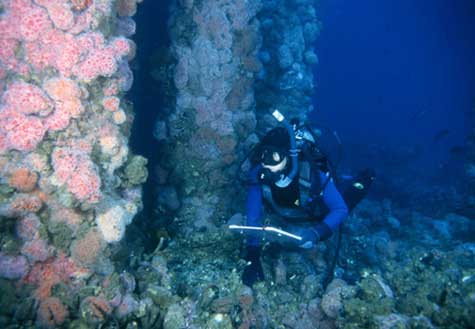
Platform Gina - Santa Barbara Channel
The Marine Science Institute of the University of California Santa Barbara has completed a 6-year study to investigate the differences between the types of fish that live around offshore oil and gas production platforms off the coast of California and the species that inhabit natural reefs in the same geographic area. This research strengthens and confirms observations made in previous studies.
Among the important conclusions (full study linked here):
- There is very extensive diversity in the species assemblages around the oil and gas platforms of California. Factors driving this variability include A) location around the platform, B) geographic location of the platforms, and C) bottom depth of the platform.
- Around each platform, there are three, unique, fish assemblages: midwaters, bottom, and shell mound. While a suite of rockfishes (of 43 species) dominate most platform assemblages, a number of other taxa (e.g., lingcod, combfishes, sculpins, and seaperches) are also important.
- Midwater fish assemblages tend to be similar across platforms; there are substantial differences among those found at bottoms and shell mounds.
- In general, the assemblages of platforms and natural sites are different. These differences are primarily based on differences in species’ densities rather than the presence or absence of taxa.
- The role that habitat complexity plays in structuring platform fish assemblages should not be underestimated.
For a less scientific look at the reef effect and other uses of offshore platforms, see our Rigs-to-Reefs+++ page, a BOE exclusive! 🙂
Read Full Post »


 Bud's Offshore Energy (BOE)