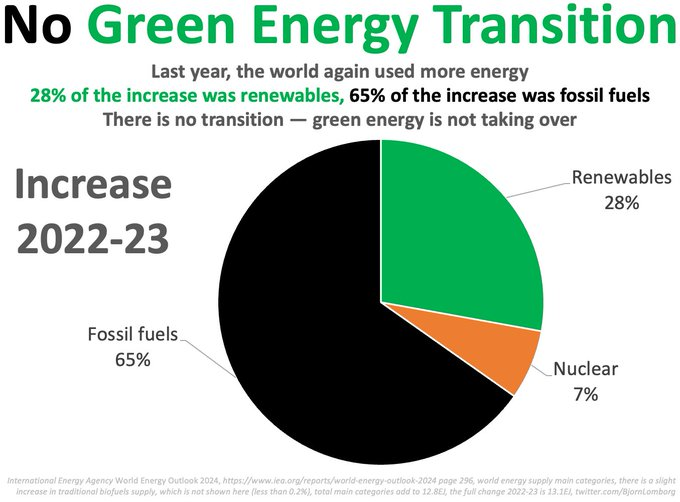
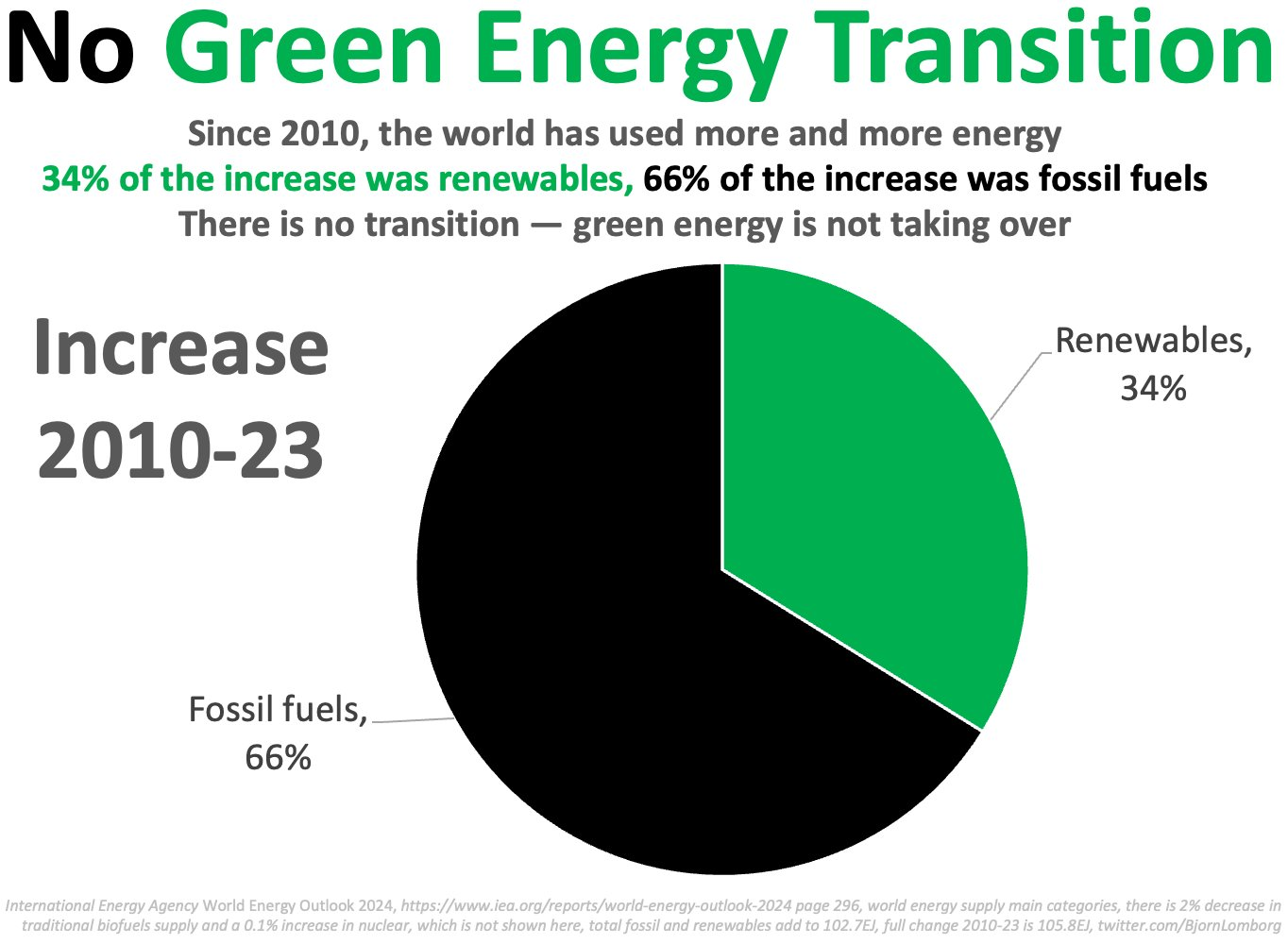
The 19th century is known as the “century of coal,” but, as the technology scholar Vaclav Smil has noted, not until the beginning of the 20th century did coal actually overtake wood as the world’s No. 1 energy source. Moreover, past energy transitions have also been “energy additions”—one source atop another. Oil, discovered in 1859, did not surpass coal as the world’s primary energy source until the 1960s, yet today the world uses almost three times as much coal as it did in the ’60s.
Aissatou Sophie Gladima, the energy minister of Senegal, put it more pithily: Restricting lending for oil and gas development, she said, “is like removing the ladder and asking us to jump or fly.”
Christyan Malek, JPMorgan’s top energy strategist: That intrinsic demand that is not visible is so significant that we don’t see demand peaking – I don’t think we’ll see [oil] demand peaking in our lifetimes,” he said. “Particularly as demand growth in [emerging markets] continues to surprise the upside.”
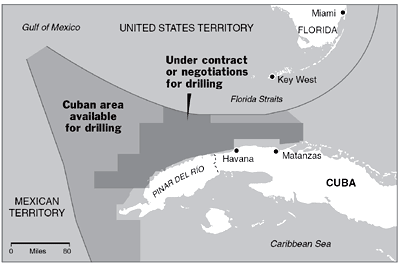
Cuba’s only deepwater well was drilled in July 2004 by Repsol, a Spanish company. Repsol reported a non-commercial oil discovery 95 miles southwest of Key West. For the past 5 years, there have been a series of announcements from Havana, but no offshore drilling activity.
Here is what we know about Cuba’s offshore oil and gas potential:
– USGS (2005) estimates that Cuba’s northern offshore basin could contain 4.6 billion (mean) barrels of oil, with a 5% probability of discovering 9.4 billion barrels. Mean natural gas resources are estimated to be 9.8 trillion cubic feet.
– Cuban government officials believe the USGS estimates are low. They indicate that Cuba may have more than 20 billion barrels of recoverable oil.
BOE applauds Denmark, not just for its leadership in conservation and wind energy, but also for its commitment to offshore oil and gas production. Denmark (population 5.4 million) currently produces approximately 250,000 barrels of oil per day from fields in the Danish sector of the North Sea. On a population basis, this is the equivalent of 14.4 million bopd for the US (310 million people), more than 10 times current US offshore production and more than double total US (onshore and offshore) production. Does the US need to be more like Denmark? Yes, we need to produce more and consume less!
 Bud's Offshore Energy (BOE)