Feeds:
Posts
Comments

Posts Tagged ‘Montara’

Mr. Jacob (PTTEP COO): I don’t think you’ll find that, necessarily, the American system would have stopped this event happening, and there are other events that happen all the time there as well.

This comment (cheap shot?) by Mr. Jacob followed several others that served only to demonstrate that both the witness and the Commission are poorly informed about international regulatory regimes, in the US and elsewhere.   Indeed, Mr. Jacob  may be even less informed about regulatory systems than he is about well barriers and safety management systems.  “May I suggest to you, Mr. Jacob” (language favored by Mr. Howe) that companies like PTTEP are the reason a certain level of prescription is necessary.  Indeed PTTEP may be the new poster child for supporters of prescriptive regulatory regimes. Oh, and please tell us about these events that “happen all the time” in the US.

In the US offshore regime, prescription is largely in the form of industry standards and best practices.  Is that such a bad thing?  The public interest and the interest of responsible companies needs to be protected from the likes of PTTEP – companies that are willing to cut corners without regard (beyond lip service) to safety, the environment, and the importance of offshore oil and gas to our economy and national security.

More to follow after I have calmed down 🙂

Read Full Post »

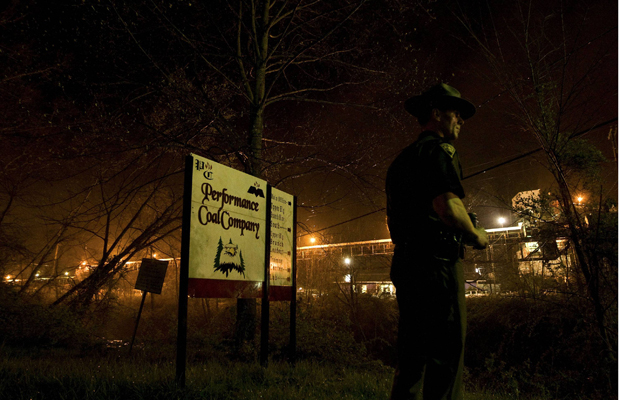
Firstly, my sincere condolences to the families, friends, and colleagues of the miners who lost their lives in the tragic accident in West Virginia.   Miners have contributed greatly to  our society and economic development.  I hope that the lessons learned from this terrible accident will be applied, that workplace risks for miners will be reduced, and that lives will be saved.

While the Montara blowout was a horrible accident, no one was killed and no one was injured.  The offshore industry has a commendable safety record, but we need to keep advancing.  These hearings are important so that we can apply the findings and protect workers and the environment even better.

Today’s comments and observations:

  1. Mr. Duncan returned to the stand and discussed the installation of the corrosion cap and the manual application of torque.  In my opinion, the pressure holding capabilities of the cap should never have come into question, because the cap should have been installed in addition to (not in lieu of) a secondary cement or mechanical barrier in the well bore.  That said, I am still hoping to hear testimony about how corrosion caps are pressure tested in situ.
  2. PTTEP is 100% owner of the license, so there were no partner issues.
  3. The consensus view that a pressure test on the 9 5/8″ casing  should have been conducted (after the cement set) is consistent with that of Mr. Ross, an outside expert.
  4. Contrary to PTTEP’s manual and accepted industry practice, the cement plugs installed as barriers in other Montara wells were not tested.
  5. Regulator acceptance of drilling contractor safety cases may create confusion about responsibility and accountability.  While these cases provide useful information, perhaps they should be considered attendant documents (to the operator/licensee drilling program), not separate regulatory actions.  In my view, the operator has to be the accountable party and all approvals and regulatory actions should be through the operator.
  6. Apparently, PTTEP was expected to adhere to the 14-day BOP pressure-test interval specified in the Atlas safety case.  However, there is evidence that more than 14 days elapsed on at least one occasion.
  7. Mr. Jacob, PTTEP COO, followed Mr. Duncan, and was challenged on PTTEP’s failure to release its internal review of the incident.  PTTEP is claiming that the report was prepared for their attorneys and is thus protected by attorney-client privilege.  So, PTTEP’s lawyers want the full story so they can assist with the defense, but they only want the regulators and the commission to have part of the story.  At least that’s the way it appears to this observer.
  8. I wish there was some discussion about the H-1 casing program.  Based on Mr. Duncan’s testimony and information gleaned from the Montara submissions, other observers and I believe the casing program was deficient.  While these deficiencies (other than the cementing aspects) may not have been contributing factors in this blowout, they are an indication of the operator’s risk tolerance.  Also, the fact (per Mr. Duncan) that the 13 3/8″ surface casing was not cemented back to surface (i.e. was not cemented up into the 20″ x 13 3/8″ annulus) precluded attaching the BOP to the 20″ (even if it was otherwise feasible).

Read Full Post »

The hearings resume tomorrow.  Catching up on what I missed:

  1. I’d like to have a dollar for each time one of the witnesses said “in hindsight.”  I guess saying “in hindsight” is a way of acknowledging that you were wrong without admitting you made a mistake.  After all, how could anyone have known that a float leak wouldn’t cure itself, that an underbalanced well would start to flow, that oil and gas might pass through the channels in the shoe, that well barrier requirements have a real purpose (beside challenging your cost-cutting creativity), and that gas bubbles might be actually be a reason for concern?  When you do a proper risk assessment, you consider all of the future possibilities and how decisions made in the present could affect the outcomes.  You are thus taking advantage of hindsight BEFORE an accident occurs.
  2. The “Not My Job” attitude seemed to be prevalent at Montara.  Did the famous Arizona highway worker use the “in  hindsight” defense?  (In hindsight, I should have removed the dead armadillo before striping the highway.)
  3. I guess I’m slow, because it took me until Day 12 (more than 1000 pages of transcripts) to realize that the mudline suspensions were not really mudline suspensions, but that the wells were hung from the jacket (just above the splash zone?).  The tops of the wells during the suspension of operations were thus in a highly corrosive environment, so the damage to the unprotected 13 3/8″ casing threads is not surprising.
  4. I’m still scratching my head about that “shudder” that was felt on the platform the night before the blowout (see Tom Maunder’s comments below).  Was there a seismic event?  I checked the USGS records and didn’t see anything for that area and time.  Apparently PTTEP checked with the Australian government.  Is the seismic grid sufficient to detect small quakes in that portion of the Timor Sea?
  5. So now we know that the integrity of 3 of the 5 Montara wells was compromised.  Gas bubbles were observed in the annulus of the G-1 and there were significant cementing issues with the H-2.
  6. None of the PCC’s were pressure tested in situ.  I’m still waiting for a tutorial on how that is done.  Would the 9 5/8″ PCC have been pressure tested against the casing?  If so, perhaps that test would have identified the channels in the casing shoe?

Read Full Post »

There is a small cadre of experienced oil and gas professionals who have been following the Montara transcripts religiously, and I have received a number of email messages about the testimony.  Pasted below is a message from Tom Maunder, a well engineer working in Alaska.   Tom has extensive industry and regulatory experience, and actually lived on the Alexander Kielland while working offshore Norway.

I have highlighted a couple of Tom’s observations in bold.  Like the Montara Commission, I had largely dismissed the possibility that a seismic event was a contributing factor to the blowout.  Also, I don’t think the Commission has sufficiently considered the effect of the horizontal well section on the delayed gas migration and flow following the removal of the corrosion cap.

Based on the statements regarding GOC and OWC, it appears that the reservoir is saturated and stratified with a gas cap over oil over water as would be expected.  What went unstated is that at reservoir conditions, the oil contains some amount of solution gas. Based on the testimony, it seems clear that any cement inside the bottom of the casing was contaminated with sea water and likely oil based on where the shoe was set.  Some amount of seal probably was established by holding pressure to allow the cement to set.  Although the plugs were bumped, the float failure and subsequent “check” allowed cement and oil to be let into the casing and that also resulted in lifting at least the top plug some distance up into the casing.  It is possible that this lifting reversed the fins essentially making the top plug worthless as a separating device for the cement and sea water displacement fluid.  This would seem to be supported since the testimony indicates that it was not possible to rebump the plug.  There is much discussion regarding the pore pressure and displacement weights or EMW.  I believe the seawater did not have sufficient weight to counter the formation pressure.  If ther was any overbalance it was very slight.  In either Seadrill’s or PTTEP’s submissions and in recent testimony the possibility of some seismic event is considered and then dismissed.  Based on reported experiences in Cook Inlet Alaska, I believe the “event” was real and it was likely whatever cement seal that had been formed at the bottom of the casing finally failing.  There have been a couple of deep production casing failures on wells drilled from Cook Inlet platforms.  In each case, the people on the platform reported feeling a “jolt”. It is not unlike shooting drill pipe conveyed perforating guns.  There is also testimony regarding the “time delay” between removing the 9-5/8” PCC to the initial burp and then the final unloading.  I don’t think any one is considering the horizontal portion of the well.  Movement along that section would be significantly different and likely much slower than movement in the more vertical portion of the wellbore. With little vertical depth change the evolution of solution gas as the pressure drops would be slower in the horizontal section.  I remember that well control school problems were changed to incorporate separate calculations for the horizontal versus vertical sections since the pressure change per time or volume in the horizontal section would be much, much smaller than in the vertical.

Read Full Post »

BOE has returned in time for an interesting day of testimony by Mr. Duncan,  PTTEP’s well construction manager.  Tom Howe, Commission attorney, was in fine form (as usual) and took Mr. Duncan to task for the root-cause cementing and barrier decisions, and PTTEP’s seeming reluctance to accept responsibility.  When told that MMS requires 2 tested barriers, Duncan tried to equate the brief period when BOPE is removed (after cementing) to install a new wellhead section with leaving a well suspended for months without a legitimate barrier.  He continues to claim claim that PTTEP had a tested and verified barrier in the annulus despite the cement miscalculation and the absence of any log or test to verify the top of the cement.

Random thoughts while reading the testimony:

  1. Are mud line suspensions acceptable, if (as was the case at Montara) there is no means of monitoring casing pressures during the suspensions?
  2. Kudos to Advanced Well Technologies, a completion contractor that told PTTEP (prior to the blowout) they were taking undue risks to save money, and stopped working for the company.  Why hire experts, if you don’t intend to listen to them?  PTTEP seemed intent on cutting costs without assessing the risks.
  3. Where is the independent review that was prepared for PTTEP’s parent company and why hasn’t it been provided to the Commission?

Of particular interest to BOE are the philosophical questions raised by the quotes below:

Q. Howe: What about sending a request to the regulator in the middle of an afternoon on a Friday, asking for approval to substitute PCCs for a cement plug to enable you to get cracking doing that the very next day and the day after, that is, over the succeeding weekend – do you think that that signifies at all the fact that things were being done on the run, you were getting around to doing things belatedly and barely staying on top of things?
A.  Duncan: That particular event, to an extent, yes.

If you are going to administer a command-and-control regulatory regime, you better be prepared to respond to frequent requests for program deviations, and you better be able to say no.  If you are a regulator, you are not part of the operating team and you shouldn’t think of yourself as such.  Absent compelling justification, changes in fundamental safety measures should not be authorized.  More philosophically, if you have to approve everything a company does, should that company be allowed to serve as an operator?  Also, how much accountability does the regulator assume by approving these deviations?

BOE will summarize Days 8-12 during the Commission’s Easter break.

Read Full Post »

Q. (Mr. Howe): It’s really just the last entry that I want to ask you about, which seems to indicate that you made a comment to the effect that there were regular changes to the program during the first phase of drilling, most of which were just to save two to three minutes and cut corners. Do you see  that?

A. (Mr. Horne, Atlas driller) Yes

Q. Do you recall providing that information to anyone?

A. Yes.

Q. Does that information that is attributed to you accurately record your views?

A. Yes.

Those comments by one of the rig’s drillers are consistent with the sense one gets in reading the submissions and testimony.  Efficiency superseded caution:

  1. Don’t deviate from the “batch” approach to drilling and completing the wells even if events dictate that a change might be prudent.
  2. Don’t stop to pressure test the casing shoe even after there was evidence of channeling.
  3. Don’t weight-up the treated water prior to the suspending the well even if there were indications that its specific gravity was lower than needed to provide an overbalance.
  4. Use “barriers” that can be quickly installed and removed even if testing and safe installation/removal have not been fully considered.
  5. Only provide training that is required by the regulator – well control school.

Transcript

Read Full Post »

Quote of the Day :):

MR WHYBROW: I hear what my friend says, and I do note that it seems that I’m the only person who is required not to try to put words into the witness’s mouth.

No major developments in today’s transcript.  Comments and observations:

  1. The discussion of the 9 5/8″ casing cementing issues is a bit imbalanced in that most of the attention is on the reinjection of fluids after the influx that  followed the casing pressure test.  Very little attention has been paid to any evidence (positive or negative) of float valve closure after the cement had been pumped.  Also, there has been almost no discussion about the timing of the casing pressure test.  This test may have created or expanded the channels in the shoe.  After the influx, it was probably a mistake to inject any fluids until the cement hardened.  At that point, it would have made sense to pressure up and test the shoe.
  2. The hearings have drawn attention to the absence of well integrity, planning, and cementing elements in well control training programs.  This should be a topic for discussion by WellCap and IWCF administrators, operators, and regulators.
  3. While fault-finding and fact-finding are certainly related, today’s sessions seemed skewed toward the former.  We’ve read enough to know there were serious flaws in the management systems, and are not so concerned about individual guilt.
  4. The testimony indicated that oil-field units were converted to metric units after the drilling reports were written, and that these revisions were solely for the purpose of satisfying the “authorities.”  US offshore regulators started down this path many years ago and reversed course after considering the safety implications.  Perhaps there is a need for further international discussion about this topic.
  5. It was interesting to learn that a rig supervisor kept excerpts from drilling reports on a personal thumb drive.  I wonder how the lawyers and IT security folks like that.
  6. It seems odd that Mr. Treasure, PTT’s senior drilling representative (albeit a contractor) on the rig when some critical decisions were made, did not get to review or provide any input to the PTT submission.

Read Full Post »

1. The Commission is well prepared and the hearings are being conducted in an effective manner.  I like the concept of establishing independent commissions of inquiry to investigate major accidents like Montara.  If this incident had happened in the US, the Coast Guard  and MMS would investigate (probably jointly).  The investigators would be technically competent and very thorough.  However, because these agencies regulate the operations they are investigating,  there would be concerns about the independence of the panel and the report.   (The President could, of course, establish an independent review panel, and this would be a distinct possibility for an event like this.  Congress would no doubt conduct high-profile hearings, but not for the purpose of better understanding the causes of the accident.)

2. The timely posting of testimony is greatly appreciated.  Most investigation panels are not so transparent and accommodating.  However, the recent submissions from witnesses and other parties (alluded to in the testimony) have not yet been posted on the website.  This information would help us better follow the hearings.

3. The root-cause cementing issues should be studied internationally.  There is room for improvement in cementing technology, practices, and standards.

4. The planning for a challenging cement job in a horizontal section of the well was surprisingly limited, and seem to have been conducted in isolated compartments.  One doesn’t get the sense that there was a coordinated plan for conducting this work; nor was there evidence of contingencies should problems arise.

5. One aspect of the  9 5/8″ cementing job that merits further discussion is the timing of the casing pressure test.  Much attention has been given to the decision to reinject fluids/cement after the influx that followed the pressure integrity test of the casing.  However, little attention has been given to the timing of that pressure test.  Had the casing pressure test not been conducted until after the cement had set, it seems possible (likely?) that fluid would not have been forced into the shoe beneath the faulty float valve and no channels would have been created in that shoe.  The subsequent reinjection of fluids, which everyone seems to agree exacerbated the problem, would not have occurred and a satisfactory barrier would have been present at the base of the casing.  Should the timing of casing pressure tests be addressed in an industry standard? Do we need a standard covering remedial actions in the event of shoe integrity issues?

6.  It has been said that offshore supervisors spend too much time reporting to various onshore offices and not enough time overseeing operations at the facility.  Does the offshore workplace suffer from too many reports and too little meaningful communication?  Is the senior offshore supervisor a facility manager or simply a conduit for information?  Is responsibility and accountability among operator and contractor personnel clearly established?

7. The operator-contractor relationship is always a sensitive topic.  A good operator should not want contractors who simply execute their directives any more than a manager should want staff who only nod in agreement.  How does a company manage their operations to ensure that they are receiving the best technical input from their contractors?

8. When your operating manual calls for cement or mechanical plugs in suspended wells, how do you substitute corrosion caps without a comprehensive review of the risks?  Did PTTEP plan to pressure test the 9 5/8″ cap (didn’t happen)?  Are such tests feasible and safe? Can you safely and effectively measure pressure under a sea floor corrosion cap?  Was the intent to remove the cap with BOPE in place (that’s not the way it was done)?  The use of pressure containing corrosion caps should be fully discussed in the aftermath of Montara?  Is a standard needed?

Read Full Post »
Q. (Mr. Berger, Counsel for the Inquiry): Have you become aware through your experience in the industry that problems with cementing are a leading factor in the cause of blowouts?
A. (Mr. Doeg, Halliburton): No, I haven’t.

Good question and a surprising response from the Halliburton employee who was the cementing contractor when the 9 5/8″ casing was set.  Mr. Doeg has 20 years of cementing experience.  What do they discuss at training sessions and safety meetings?

Q. (Mr. Berger): Were you aware that the well you were working on on 7 March last year had entered the reservoir?
A. (Mr. Doeg): No, I wasn’t.
Q. (Mr. Berger): You’ve only become aware that it entered the reservoir subsequently; is that right?
A. (Mr. Doeg): Correct.

Stunning!   Keep in mind that this was a long 9 5/8″ string being cemented through an extended horizontal section.

Food for thought (In questioning Mr. Doeg, Mr. Berger raised the possibility of compatibility issues between the Weatherford float collar and the Halliburton plugs):

Q. When you have a float collar and a bottom plug manufactured by different companies, can issues arise about their compatibility?
A. They can, yes.
Q. What sorts of issues can arise?
A. When it comes to drilling out, they generally run non-rotating plugs to prevent that, and in this case they didn’t run non-rotating plugs; they ran an additional piece of equipment to prevent them from rotating.
Q. What about when seating the bottom plug in the float collar – can issues arise where the two parts are manufactured by different companies?
A. Normally not, but with this additional piece of equipment, possibly.

Transcript

Read Full Post »

It was a long and difficult day on the witness stand for Mr. Noel Treasure, PTTEP’s senior representative on the West Atlas during the problematic 9 5/8″ casing cementing job.  The transcript provides evidence of the stress that Mr. Treasure has  been under since the blowout.  While we are troubled by many of PTTEP’s actions at Montara, we nonetheless appreciate the difficult times that key participants in the incident are experiencing.  Although no one was injured at Montara, the blowout will still have a substantial human cost.  There are no winners.

Most of the disussion involved the key 9 5/8″ casing cementing issues including the serious miscalculation of cement volumes, the float failures and fluid influx, a remedy (reinjection of cement/fluids) that probably exacerbated the problem, the absence of a pressure test to check the floats, shoe, and casing after the cement had set,  and internal confusion and miscommunication.  Other testimony discussed the absence of a hydrostatic overbalance in the suspended well bore, the decisions leading to the use of corrosion caps as barriers in lieu of cement or mechanical plugs, and the failure to install the 13 3/8″ cap, partly because the well slot was being reserved as a “parking spot” for the BOP stack.

While the Montara blowout could and should have been prevented, the incident does draw further attention to the need for improvements in the consistency, reliability, and standardization of cementing operations.  Cementing issues are associated with well control problems, sustained casing pressure in producing wells, and post-abandonment leakage.  Best practices documents should not just address standard procedures, but also remedies, including actions  that should be followed when irregularities, such as float valve failures, are identified.

Read Full Post »

« Newer Posts - Older Posts »