Feeds:
Posts
Comments

Posts Tagged ‘Montara’

I want to suggest to you that the primary purpose of PCCs is actually to perform an anticorrosive function, particularly in relation to MLS systems that are subsurface of the sea – Tom Howe, Counsel for the Inquiry

-Mr. Howe made it clear that these caps are primarily for corrosion prevention, particularly in the case of mud line suspensions such as the Montara wells.  Regardless of their pressure containing capabilities, PCCs are difficult to test in situ and must be removed with the BOPE in place to avoid operating without a barrier.  Other highlights of the Day 3 testimony:

-Seadrill/Atlas engaged in a bit of damage control after implying yesterday that their OIM had lead responsibility for all operations at the facility.  In a response to a question from the Seadrill attorney, Mr. Gouldin (Seadrill) rephrased his position as follows:

In various parts of my evidence yesterday, there were issues that came up about the OIM having full responsibility, but he can only undertake that responsibility if he is given clear and full information and facts from the other parties involved in the operation.  He cannot operate in isolation. When I answered that the responsibility is there – yes, the responsibility is there to be transparent to him at all times in order to allow him to fully enact his duties. That’s what I meant in my response.

-In questioning Mr. Gouldin and Mr. Millar (Seadrill/Atlas), Mr. Howe clearly established that there was fluid influx following the cementing of the 9 5/8″ casing and that the response to this influx (injecting cement and fluid volumes greater than the influx) likely exacerbated the problem.

-Mr. Howe presented evidence that the the inhibited sea water that was left in the suspended well may not have been sufficiently weighted to over-balance the formation pressure in the reservoir

-Insufficient cement volumes may have facilitated gas migration during cementing.

-Senior PTTEP personnel were aware that the 13 3/8″ corrosion cap had not been installed.  Mr. Howe suggested that the cap may not have been installed because it was in poor condition.
Read Full Post »

Mr. Howe, I salute you.  You are providing a great service for responsible offshore operators, contractors, and regulators worldwide.

These transcripts should be mandatory reading for everyone involved with offshore safety and all petroleum engineering students.  More to follow.

Read Full Post »

Fortunately, no human life was lost. However, the implications and consequences of the blowout are broad and wide ranging, including for the environment, for the petroleum industry and the Australian system of regulation of offshore petroleum operations – Tom Howe, Counsel for the Inquiry

Firstly, kudos to the Commission for promptly posting the hearings transcript.  Because of a change in schedule, the only speakers were two attorneys for the Inquiry Commission – Tom Howe and Andrew Berger.  A  senior representative of Atlas, the drilling contractor, is scheduled to testify tomorrow.

Observations from Day 1:

  1. The Commission appears to have carefully reviewed the submissions and seems to be well prepared for the hearings.
  2. From a regulatory perspective, this comment from Mr. Howe was particularly interesting: “The preliminary view of counsel assisting is that in relation to matters of wellhead integrity, a greater level of prescription may be necessary to ensure compliance with the apparently nebulous concept of ‘good oilfield practice’.”  I fully agree with this comment.  No matter what type of regulatory regime is in place, best industry practices should be clearly identified and companies should be legally obligated to conduct their operations in accordance with such practices.
  3. Quoting Mr. Berger: “one area of concern to counsel assisting is that PTTEP applied to suspend the H1 well using a … pressure corrosion cap instead of a cement plug as a barrier, this approval appears to have been granted in precisely 30 minutes.”   In a command-and-control type of regulatory regime,  the regulator has to be available and able to make timely decisions.  However, absent compelling justification, deviations from accepted practices should never be made in this manner.
  4. There were no surprises with regard to previously reported cementing problems.  However, according to Mr. Howe, both
    PTT and Atlas now accept that the failure to conduct a pressure integrity test after cementing the 9 5/8″ casing was a root cause of the subsequent blowout.
  5. I am puzzled by this statement from Mr. Howe: “As we understand it, PTT now accepts that PTT personnel on the West Atlas rig should have been alert to risks associated with cementing of the casing shoe and should have been more forthcoming when assistance was sought about the problem from PTT personnel located on shore.”  Is PTT (PTTEP) management trying to distance itself from the problem, reduce its liability, and pass the buck to the rig crew?  What a surprise! (sarcasm intended)
  6. More internal PTT finger pointing with regard to the missing PCC (corrosion cap): “PTT personnel on shore had been told in writing by PTT personnel on the rig that the PCC had been installed.”
  7. Good job by the two speakers for the Commission of Inquiry.

Looking forward to hearing the Atlas testimony tomorrow.

Read Full Post »

Montara Blowout

Montara Blowout, TImor Sea

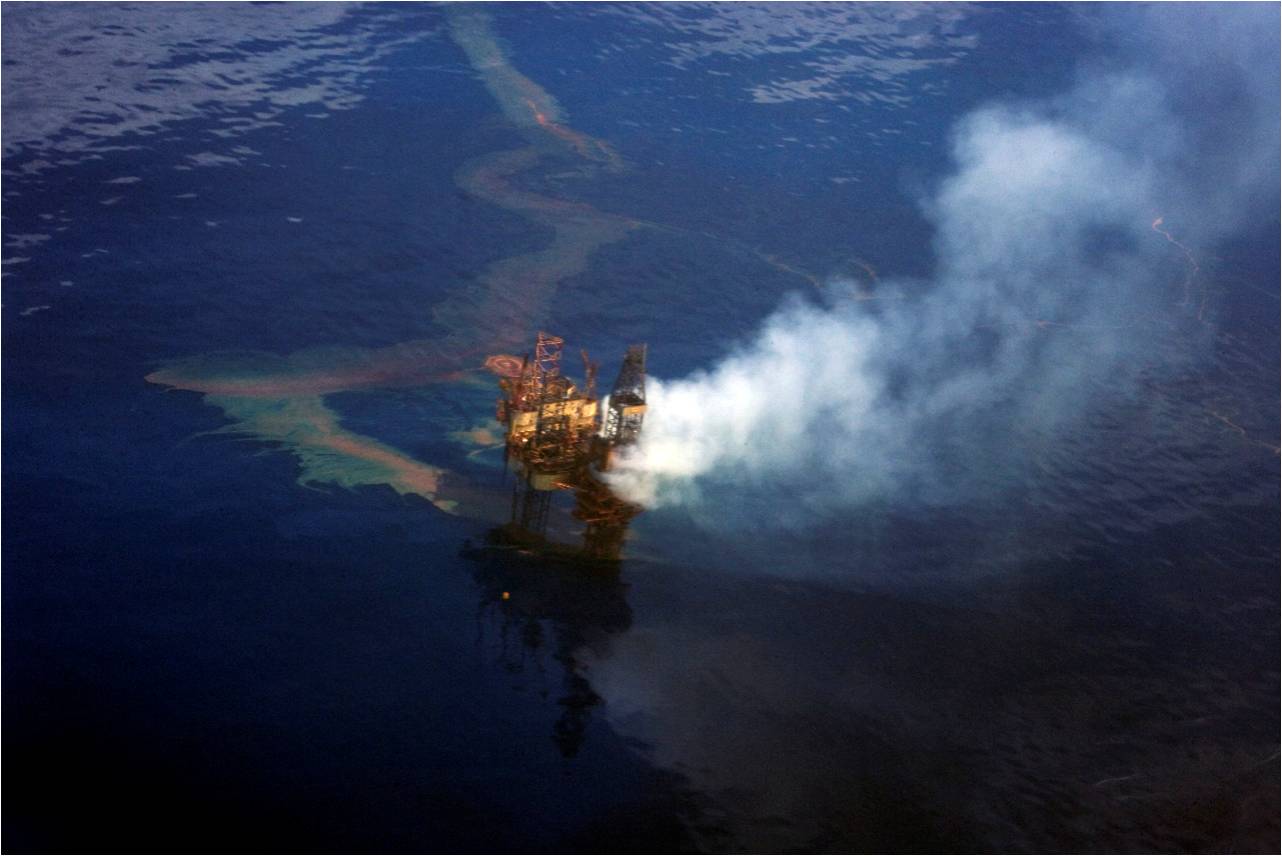
The Australian Commission that is investigating the 2009 Montara blowout in the Timor Sea will begin hearing testimony today (15 March) in Canberra.  According to the Commission’s website, the first witness will be a contract drilling supervisor.  It does not appear that the hearings will be televised or streamed online.  However, the guidelines indicate that the “transcript of the hearing will, subject to any confidentiality orders made, be placed on the Inquiry’s website as soon as it is available.” We are awaiting the testimony with great interest.

Read Full Post »

« Newer Posts