Feeds:
Posts
Comments

Posts Tagged ‘accidents’

Quote of the Day :):

MR WHYBROW: I hear what my friend says, and I do note that it seems that I’m the only person who is required not to try to put words into the witness’s mouth.

No major developments in today’s transcript.  Comments and observations:

  1. The discussion of the 9 5/8″ casing cementing issues is a bit imbalanced in that most of the attention is on the reinjection of fluids after the influx that  followed the casing pressure test.  Very little attention has been paid to any evidence (positive or negative) of float valve closure after the cement had been pumped.  Also, there has been almost no discussion about the timing of the casing pressure test.  This test may have created or expanded the channels in the shoe.  After the influx, it was probably a mistake to inject any fluids until the cement hardened.  At that point, it would have made sense to pressure up and test the shoe.
  2. The hearings have drawn attention to the absence of well integrity, planning, and cementing elements in well control training programs.  This should be a topic for discussion by WellCap and IWCF administrators, operators, and regulators.
  3. While fault-finding and fact-finding are certainly related, today’s sessions seemed skewed toward the former.  We’ve read enough to know there were serious flaws in the management systems, and are not so concerned about individual guilt.
  4. The testimony indicated that oil-field units were converted to metric units after the drilling reports were written, and that these revisions were solely for the purpose of satisfying the “authorities.”  US offshore regulators started down this path many years ago and reversed course after considering the safety implications.  Perhaps there is a need for further international discussion about this topic.
  5. It was interesting to learn that a rig supervisor kept excerpts from drilling reports on a personal thumb drive.  I wonder how the lawyers and IT security folks like that.
  6. It seems odd that Mr. Treasure, PTT’s senior drilling representative (albeit a contractor) on the rig when some critical decisions were made, did not get to review or provide any input to the PTT submission.
Read Full Post »

1. The Commission is well prepared and the hearings are being conducted in an effective manner.  I like the concept of establishing independent commissions of inquiry to investigate major accidents like Montara.  If this incident had happened in the US, the Coast Guard  and MMS would investigate (probably jointly).  The investigators would be technically competent and very thorough.  However, because these agencies regulate the operations they are investigating,  there would be concerns about the independence of the panel and the report.   (The President could, of course, establish an independent review panel, and this would be a distinct possibility for an event like this.  Congress would no doubt conduct high-profile hearings, but not for the purpose of better understanding the causes of the accident.)

2. The timely posting of testimony is greatly appreciated.  Most investigation panels are not so transparent and accommodating.  However, the recent submissions from witnesses and other parties (alluded to in the testimony) have not yet been posted on the website.  This information would help us better follow the hearings.

3. The root-cause cementing issues should be studied internationally.  There is room for improvement in cementing technology, practices, and standards.

4. The planning for a challenging cement job in a horizontal section of the well was surprisingly limited, and seem to have been conducted in isolated compartments.  One doesn’t get the sense that there was a coordinated plan for conducting this work; nor was there evidence of contingencies should problems arise.

5. One aspect of the  9 5/8″ cementing job that merits further discussion is the timing of the casing pressure test.  Much attention has been given to the decision to reinject fluids/cement after the influx that followed the pressure integrity test of the casing.  However, little attention has been given to the timing of that pressure test.  Had the casing pressure test not been conducted until after the cement had set, it seems possible (likely?) that fluid would not have been forced into the shoe beneath the faulty float valve and no channels would have been created in that shoe.  The subsequent reinjection of fluids, which everyone seems to agree exacerbated the problem, would not have occurred and a satisfactory barrier would have been present at the base of the casing.  Should the timing of casing pressure tests be addressed in an industry standard? Do we need a standard covering remedial actions in the event of shoe integrity issues?

6.  It has been said that offshore supervisors spend too much time reporting to various onshore offices and not enough time overseeing operations at the facility.  Does the offshore workplace suffer from too many reports and too little meaningful communication?  Is the senior offshore supervisor a facility manager or simply a conduit for information?  Is responsibility and accountability among operator and contractor personnel clearly established?

7. The operator-contractor relationship is always a sensitive topic.  A good operator should not want contractors who simply execute their directives any more than a manager should want staff who only nod in agreement.  How does a company manage their operations to ensure that they are receiving the best technical input from their contractors?

8. When your operating manual calls for cement or mechanical plugs in suspended wells, how do you substitute corrosion caps without a comprehensive review of the risks?  Did PTTEP plan to pressure test the 9 5/8″ cap (didn’t happen)?  Are such tests feasible and safe? Can you safely and effectively measure pressure under a sea floor corrosion cap?  Was the intent to remove the cap with BOPE in place (that’s not the way it was done)?  The use of pressure containing corrosion caps should be fully discussed in the aftermath of Montara?  Is a standard needed?

Read Full Post »

Q. (Mr. Berger, Counsel for the Inquiry): Have you become aware through your experience in the industry that problems with cementing are a leading factor in the cause of blowouts?
A. (Mr. Doeg, Halliburton): No, I haven’t.

Good question and a surprising response from the Halliburton employee who was the cementing contractor when the 9 5/8″ casing was set.  Mr. Doeg has 20 years of cementing experience.  What do they discuss at training sessions and safety meetings?

Q. (Mr. Berger): Were you aware that the well you were working on on 7 March last year had entered the reservoir?
A. (Mr. Doeg): No, I wasn’t.
Q. (Mr. Berger): You’ve only become aware that it entered the reservoir subsequently; is that right?
A. (Mr. Doeg): Correct.

Stunning!   Keep in mind that this was a long 9 5/8″ string being cemented through an extended horizontal section.

Food for thought (In questioning Mr. Doeg, Mr. Berger raised the possibility of compatibility issues between the Weatherford float collar and the Halliburton plugs):

Q. When you have a float collar and a bottom plug manufactured by different companies, can issues arise about their compatibility?
A. They can, yes.
Q. What sorts of issues can arise?
A. When it comes to drilling out, they generally run non-rotating plugs to prevent that, and in this case they didn’t run non-rotating plugs; they ran an additional piece of equipment to prevent them from rotating.
Q. What about when seating the bottom plug in the float collar – can issues arise where the two parts are manufactured by different companies?
A. Normally not, but with this additional piece of equipment, possibly.

Transcript

Read Full Post »

It was a long and difficult day on the witness stand for Mr. Noel Treasure, PTTEP’s senior representative on the West Atlas during the problematic 9 5/8″ casing cementing job.  The transcript provides evidence of the stress that Mr. Treasure has  been under since the blowout.  While we are troubled by many of PTTEP’s actions at Montara, we nonetheless appreciate the difficult times that key participants in the incident are experiencing.  Although no one was injured at Montara, the blowout will still have a substantial human cost.  There are no winners.

Most of the disussion involved the key 9 5/8″ casing cementing issues including the serious miscalculation of cement volumes, the float failures and fluid influx, a remedy (reinjection of cement/fluids) that probably exacerbated the problem, the absence of a pressure test to check the floats, shoe, and casing after the cement had set,  and internal confusion and miscommunication.  Other testimony discussed the absence of a hydrostatic overbalance in the suspended well bore, the decisions leading to the use of corrosion caps as barriers in lieu of cement or mechanical plugs, and the failure to install the 13 3/8″ cap, partly because the well slot was being reserved as a “parking spot” for the BOP stack.

While the Montara blowout could and should have been prevented, the incident does draw further attention to the need for improvements in the consistency, reliability, and standardization of cementing operations.  Cementing issues are associated with well control problems, sustained casing pressure in producing wells, and post-abandonment leakage.  Best practices documents should not just address standard procedures, but also remedies, including actions  that should be followed when irregularities, such as float valve failures, are identified.

Read Full Post »

I want to suggest to you that the primary purpose of PCCs is actually to perform an anticorrosive function, particularly in relation to MLS systems that are subsurface of the sea – Tom Howe, Counsel for the Inquiry

-Mr. Howe made it clear that these caps are primarily for corrosion prevention, particularly in the case of mud line suspensions such as the Montara wells.  Regardless of their pressure containing capabilities, PCCs are difficult to test in situ and must be removed with the BOPE in place to avoid operating without a barrier.  Other highlights of the Day 3 testimony:

-Seadrill/Atlas engaged in a bit of damage control after implying yesterday that their OIM had lead responsibility for all operations at the facility.  In a response to a question from the Seadrill attorney, Mr. Gouldin (Seadrill) rephrased his position as follows:

In various parts of my evidence yesterday, there were issues that came up about the OIM having full responsibility, but he can only undertake that responsibility if he is given clear and full information and facts from the other parties involved in the operation.  He cannot operate in isolation. When I answered that the responsibility is there – yes, the responsibility is there to be transparent to him at all times in order to allow him to fully enact his duties. That’s what I meant in my response.

-In questioning Mr. Gouldin and Mr. Millar (Seadrill/Atlas), Mr. Howe clearly established that there was fluid influx following the cementing of the 9 5/8″ casing and that the response to this influx (injecting cement and fluid volumes greater than the influx) likely exacerbated the problem.

-Mr. Howe presented evidence that the the inhibited sea water that was left in the suspended well may not have been sufficiently weighted to over-balance the formation pressure in the reservoir

-Insufficient cement volumes may have facilitated gas migration during cementing.

-Senior PTTEP personnel were aware that the 13 3/8″ corrosion cap had not been installed.  Mr. Howe suggested that the cap may not have been installed because it was in poor condition.

Read Full Post »

Mr. Howe, I salute you.  You are providing a great service for responsible offshore operators, contractors, and regulators worldwide.

These transcripts should be mandatory reading for everyone involved with offshore safety and all petroleum engineering students.  More to follow.

Read Full Post »

THE COMMISSIONER: Mr Howe, before you start, let me remind the people in the Commission that if I say I’m starting at 11.20, I mean to start at 11.20.

Amen Commissioner Borthwick!

David Gouldin, Operations Manager for Seadrill Limited (Atlas), was today’s witness.  The transcript is a very interesting read for us operations, regulatory, and safety geeks.  Featured topics included licensee-contractor relationships and responsibilities, what constitutes a barrier in the casing, measuring pressure beneath a corrosion cap, and the root cause cementing and well integrity issues.  Particularly interesting were the discussions about authority and accountability.   In US waters, the lessee/operator is the responsible party for all oil and gas activities on a lease.  This accountability is well established.  This does not appear to be the case in Australia, and Mr. Howe, Counsel for the Inquiry (I continue to be impressed by his preparation and questioning)  suggested “one way of perhaps addressing that is to make it absolutely clear that the licensee can’t outsource safety and ultimate control to anyone.”  I fully agree with that sentiment.  One party must be accountable and that party should be the licensee.

Read Full Post »

Fortunately, no human life was lost. However, the implications and consequences of the blowout are broad and wide ranging, including for the environment, for the petroleum industry and the Australian system of regulation of offshore petroleum operations – Tom Howe, Counsel for the Inquiry

Firstly, kudos to the Commission for promptly posting the hearings transcript.  Because of a change in schedule, the only speakers were two attorneys for the Inquiry Commission – Tom Howe and Andrew Berger.  A  senior representative of Atlas, the drilling contractor, is scheduled to testify tomorrow.

Observations from Day 1:

  1. The Commission appears to have carefully reviewed the submissions and seems to be well prepared for the hearings.
  2. From a regulatory perspective, this comment from Mr. Howe was particularly interesting: “The preliminary view of counsel assisting is that in relation to matters of wellhead integrity, a greater level of prescription may be necessary to ensure compliance with the apparently nebulous concept of ‘good oilfield practice’.”  I fully agree with this comment.  No matter what type of regulatory regime is in place, best industry practices should be clearly identified and companies should be legally obligated to conduct their operations in accordance with such practices.
  3. Quoting Mr. Berger: “one area of concern to counsel assisting is that PTTEP applied to suspend the H1 well using a … pressure corrosion cap instead of a cement plug as a barrier, this approval appears to have been granted in precisely 30 minutes.”   In a command-and-control type of regulatory regime,  the regulator has to be available and able to make timely decisions.  However, absent compelling justification, deviations from accepted practices should never be made in this manner.
  4. There were no surprises with regard to previously reported cementing problems.  However, according to Mr. Howe, both
    PTT and Atlas now accept that the failure to conduct a pressure integrity test after cementing the 9 5/8″ casing was a root cause of the subsequent blowout.
  5. I am puzzled by this statement from Mr. Howe: “As we understand it, PTT now accepts that PTT personnel on the West Atlas rig should have been alert to risks associated with cementing of the casing shoe and should have been more forthcoming when assistance was sought about the problem from PTT personnel located on shore.”  Is PTT (PTTEP) management trying to distance itself from the problem, reduce its liability, and pass the buck to the rig crew?  What a surprise! (sarcasm intended)
  6. More internal PTT finger pointing with regard to the missing PCC (corrosion cap): “PTT personnel on shore had been told in writing by PTT personnel on the rig that the PCC had been installed.”
  7. Good job by the two speakers for the Commission of Inquiry.

Looking forward to hearing the Atlas testimony tomorrow.

Read Full Post »

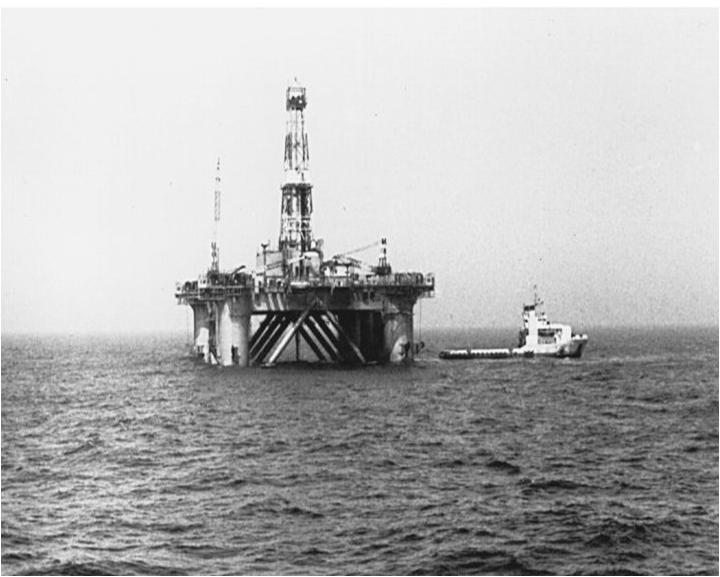
Ocean Ranger

Exactly 28 years ago (15 February 1982), the Ocean Ranger sank on the Grand Banks east of Newfoundland in one of the worst tragedies in the history of the offshore industry.  Everyone associated with oil and gas operations was stung by the loss.  Those of us in the USGS/MMS North Atlantic District were particularly touched by this tragic incident.  We had seen what the North Atlantic can offer – “routine” 100 mph winds and 40-foot seas that tested equipment and personnel.  The 84 men who died were our brothers, working in one of the world’s most challenging environments to support their families and help meet North America’s energy needs.  The sinking of the Ocean Ranger and other offshore tragedies are not mere matters of chance.  We must remember these incidents and work together to prevent their recurrence.

Read Full Post »

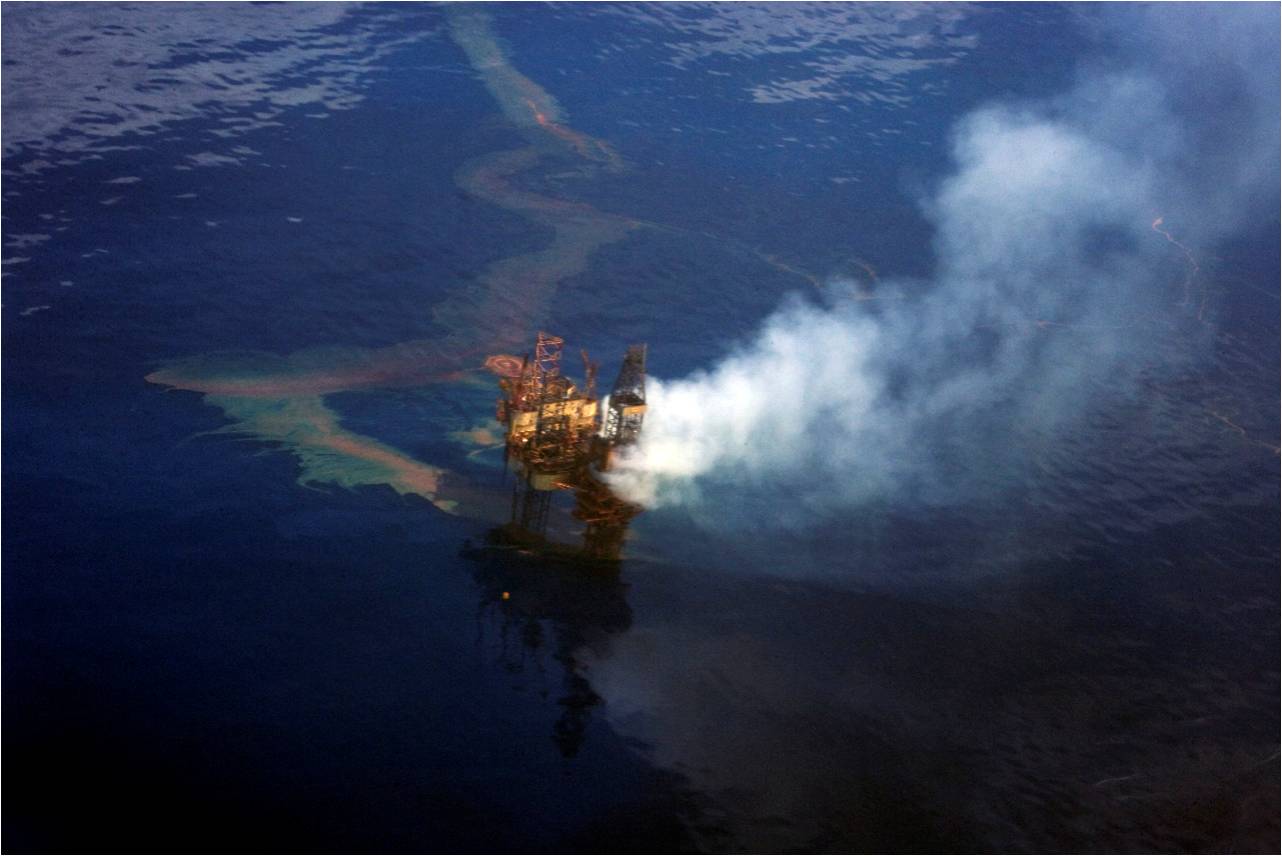
Montara Blowout

BOE  has reviewed reports and comments submitted to the Australian Commission of Inquiry.  Submissions by the operator, PTTEP, and the drilling contractor, Atlas, confirm the “street talk” about cementing issues and the absence of a second barrier in the suspended well.  BOE is troubled by a number of issues associated with this incident and has provided comments to the Commission.  We will continue to track reports on this and other offshore incidents.

Read Full Post »

« Newer Posts - Older Posts »