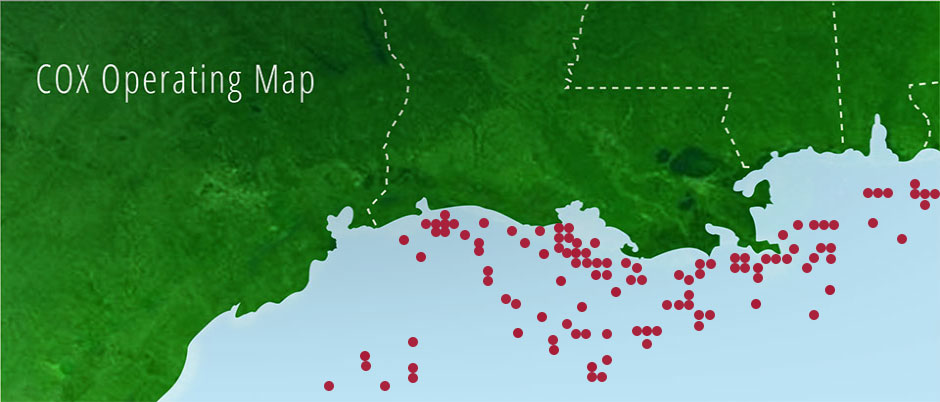
Cox proposes to sell its Gulf of Mexico assets to W&T Offshore for $88.5 million. The bankruptcy case docket has 64 pages of linked documents including many objections to the terms of the sale.
The bankruptcy court’s priorities should be 1) minimizing safety and environmental risks and 2) protecting the public from the massive decommissioning liabilities.
Per the latest BOEM information, Cox and affiliates Energy XXI and EPL operate 477 platforms, which is 31% of the Gulf of Mexico total! (See the related information posted last June.) BSEE estimates that the decommissioning costs for these platforms will exceed $4.5 billion!
Per BSEE data, Cox and its affiliates were cited for 780 incidents of noncompliance (violations) in 2023. They thus accounted for 43% of all 2023 GoM INCs.
Questions:
- How will taxpayers be protected from Cox’s $4.5+ billion decommissioning obligations?
- What is the plan for both safely decommissioning facilities and operating those that remain?
- Why was Cox allowed to continue expanding GoM operations without demonstrating financial assurance and operational competence?
- Why did BOEM propose to eliminate consideration of a company’s compliance record in determining the need for supplemental financial assurance?
- How was a failing operator (Cox) selected just 8 months ago for a Federally funded (DOE) project to repurpose GoM facilities for carbon sequestration purposes?
The Cox bankruptcy is yet another costly lesson for Federal regulators. Moving forward, decommissioning and lease assignment policies must prioritize safety, environmental protection, and protection of the public’s financial interests.
 Bud's Offshore Energy (BOE)
Leave a comment