Feeds:
Posts
Comments

Archive for June, 2023

Just as I was lamenting the absence of scientific surveying in the Atlantic, my former colleague Renee Orr brought this NOAA announcement to my attention. Researchers from the University of Texas Institute of Geophysics and Lamont-Doherty Earth Observatory, with funding from the National Science Foundation, propose to conduct seismic surveys in the Blake Plateau area of the South Atlantic (map below).

The proposed study would acquire two-dimensional (2-D) seismic reflection and seismic refraction data to examine the structure and evolution of the rifted margins of the southeastern United States, including the rift dynamics during the formation of the Carolina Trough and Blake Plateau.

The survey will lead to a better understanding of “the interaction between tectonic and magmatic processes that led to continental breakup and the onset of seafloor spreading in the central Atlantic Ocean 200 million years ago.” The investigators are particularly interested in the “stratigraphy of sediments that formed during and after rifting, the degree of crustal stretching at the continental margins, crustal faults that formed during extension of the margin, and the geometry of lava flows that were placed on the crust before the start of seafloor spreading.”

While not a primary purpose, the research should improve our understanding of the relationship between productive oil and gas fields offshore Africa and US analogs. Paul Post and his BOEM team estimated that the US Atlantic could contain >20 billion BOE (link to the latest report).

NOAA has conducted a detailed review of the proposal and made a “preliminary determination that the impacts resulting from this activity are not expected to adversely affect any of the species or stocks through effects on annual rates of recruitment or survival.”

Read Full Post »

Rick was one of the first Americans on Utah Beach during the D-Day invasion, helped to protect the endangered American Bald Eagle, and was an offshore energy (green hydrogen) pioneer. More about Rick.

Read Full Post »

The Supreme Court has decided to allow the 9th Circuit decision on offshore well stimulation to stand.

From a regulatory and technical standpoint, the 9th Circuit decision is highly questionable. The limited well stimulation operations offshore California were conducted 9-31 years ago and were carefully reviewed and monitored. No fluids were released or escaped to the marine environment.

During the Obama administration (and under the capable leadership of Directors Brian Salerno and Abigail Ross Hopper), BSEE and BOEM conducted a Programmatic Environmental Assessment (EA) and issued a Finding of No Significant Impact (FONSI) from the use of specific well stimulation treatments in oil and gas activities on the Pacific OCS. The 9th Circuit decided that wasn’t enough and the SCOTUS chose not to review their decision.

Given the current state of Pacific offshore operations, the court decisions will have little or no effect on well activity now or in the foreseeable future. If the BSEE well permitting site is up-to-date, there have been no Pacific well operations in the past 3 years. For the 2 years prior to that, the only well operations were for plugging and abandonment purposes. Therefore, the main concerns are the decision to require an EIS prior to any future well stimulation operations, and perhaps more importantly, the implications of the decision on offshore operations elsewhere.

Read Full Post »

In the attached paper, John Smith and Robert Byrd summarize the daunting decommissioning challenges facing California offshore operators:

  1. Large, deep-water structures.
  2. Lack of decommissioning infrastructure and services locally.
  3. High HLV mobilization costs.
  4. Jones Act restrictions.
  5. Limited onshore processing and disposal options.
  6. Air quality compliance costs.
  7. Site clearance and debris removal requirements.
  8. Environmental and space use operating constraints.
  9. A complex regulatory framework and risk of litigation.
  10. An unworkable reefing law and lack of a State approved artificial reefing program.

Does the regulatory framework prevent you from doing what the regulations require? Catch-22?

Read Full Post »

All we know at this point is that a Woodside contractor died during work activities at noon today (AWST).

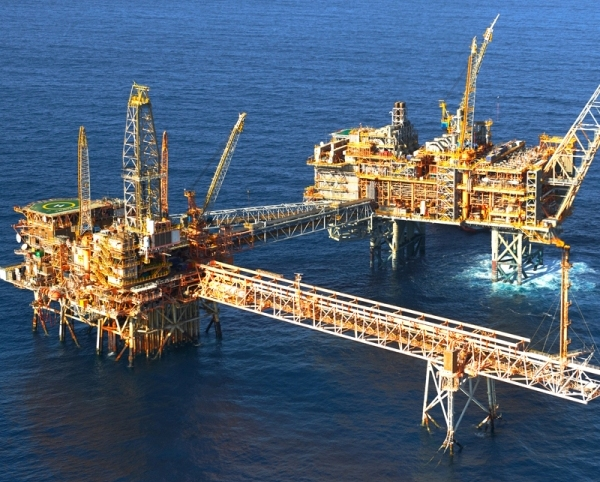
The North Rankin complex is in 135 km offshore from Dampier on the northwest coast of Australia and is in 125 m of water.

More to follow.

North Rankin complex

Read Full Post »

Read Full Post »

This CBC story, which includes excellent video interviews, was brought to my attention by Newfoundlander Howard Pike, an engineer and offshore safety leader.

Rigs-to-Removal (carbon)?

We know a lot about Rigs-to-Reefs, and the importance of active and reefed platforms in providing the habitat, shelter, and food that is necessary to increase biodiversity and productivity. However, the carbon reduction potential of artificial reefs has received little attention.

The linked CBC story is particularly interesting in that it includes interviews with artificial reef researchers who are assessing the carbon capture aspects. To date the results are encouraging:

As for the impact on climate change, the researchers say they have found some evidence that an artificial reef could hold more carbon compared to a natural reef.

Read Full Post »

« Newer Posts