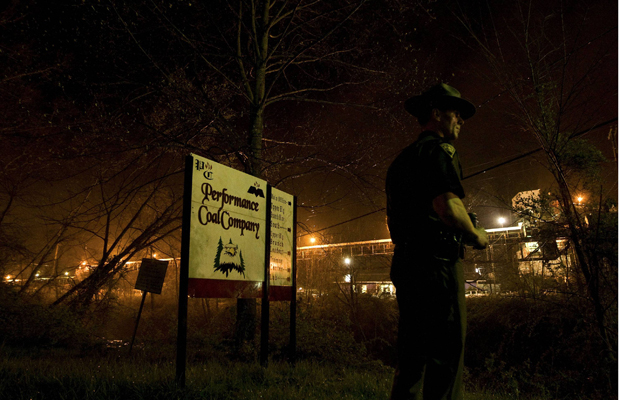
 Firstly, my sincere condolences to the families, friends, and colleagues of the miners who lost their lives in the tragic accident in West Virginia. Miners have contributed greatly to our society and economic development. I hope that the lessons learned from this terrible accident will be applied, that workplace risks for miners will be reduced, and that lives will be saved.
While the Montara blowout was a horrible accident, no one was killed and no one was injured. The offshore industry has a commendable safety record, but we need to keep advancing. These hearings are important so that we can apply the findings and protect workers and the environment even better.
Today’s comments and observations:
- Mr. Duncan returned to the stand and discussed the installation of the corrosion cap and the manual application of torque. In my opinion, the pressure holding capabilities of the cap should never have come into question, because the cap should have been installed in addition to (not in lieu of) a secondary cement or mechanical barrier in the well bore. That said, I am still hoping to hear testimony about how corrosion caps are pressure tested in situ.
- PTTEP is 100% owner of the license, so there were no partner issues.
- The consensus view that a pressure test on the 9 5/8″ casing should have been conducted (after the cement set) is consistent with that of Mr. Ross, an outside expert.
- Contrary to PTTEP’s manual and accepted industry practice, the cement plugs installed as barriers in other Montara wells were not tested.
- Regulator acceptance of drilling contractor safety cases may create confusion about responsibility and accountability. While these cases provide useful information, perhaps they should be considered attendant documents (to the operator/licensee drilling program), not separate regulatory actions. In my view, the operator has to be the accountable party and all approvals and regulatory actions should be through the operator.
- Apparently, PTTEP was expected to adhere to the 14-day BOP pressure-test interval specified in the Atlas safety case. However, there is evidence that more than 14 days elapsed on at least one occasion.
- Mr. Jacob, PTTEP COO, followed Mr. Duncan, and was challenged on PTTEP’s failure to release its internal review of the incident. PTTEP is claiming that the report was prepared for their attorneys and is thus protected by attorney-client privilege. So, PTTEP’s lawyers want the full story so they can assist with the defense, but they only want the regulators and the commission to have part of the story. At least that’s the way it appears to this observer.
- I wish there was some discussion about the H-1 casing program. Based on Mr. Duncan’s testimony and information gleaned from the Montara submissions, other observers and I believe the casing program was deficient. While these deficiencies (other than the cementing aspects) may not have been contributing factors in this blowout, they are an indication of the operator’s risk tolerance. Also, the fact (per Mr. Duncan) that the 13 3/8″ surface casing was not cemented back to surface (i.e. was not cemented up into the 20″ x 13 3/8″ annulus) precluded attaching the BOP to the 20″ (even if it was otherwise feasible).
 Bud's Offshore Energy (BOE)
Leave a comment