Feeds:
Posts
Comments

Posts Tagged ‘Quaise Energy’

Because space requirements and intermittency limit the ultimate potential of other renewable energy super-sources, ultradeep geothermal may be the most exciting energy alternative on the horizon. However, ultradeep geothermal’s enormous potential can only be achieved if we can reliably drill deep beneath the surface and tap into superheated rock. As Quaise Energy’s Carlos Araque, formerly a Schlumberger engineer, has noted: “A lot of the challenges are the same as for oil and gas.”

This short video provides a good summary of the drilling technology that is under development.

Read Full Post »

Linking an excellent article on a renewable energy alternative that BOE has been following closely.

Good assessment:

I’m confident because the externalities that come with wind, solar and batteries, which are the other top candidates, are too large to bear at multi-terawatt scale: too much land, too many minerals, too much labour per unit of energy. Geothermal is very different: it is more like fossil fuels without the carbon. It’s more like nuclear – except fusion doesn’t work yet and fission is controversial.

Carlos Araque

Challenges:

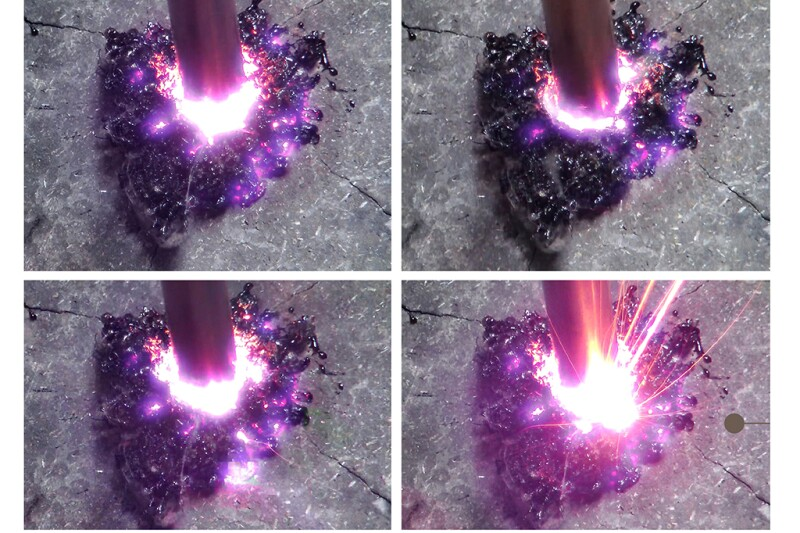
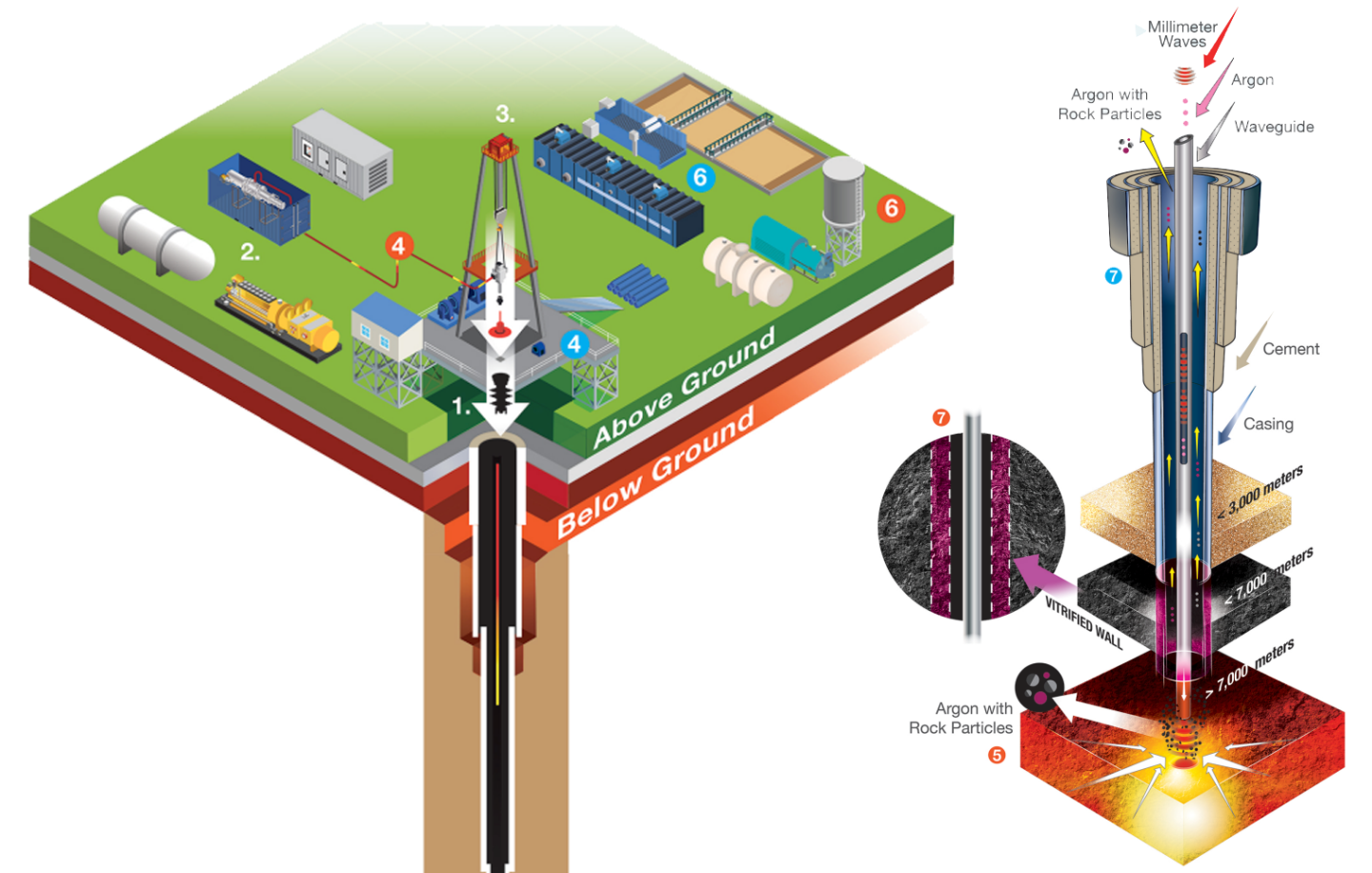
A lot of the challenges are the same as for oil and gas. The subsurface is an uncertain environment. The deeper you go, the more extremes you have, but we’ve come a long way with the oil and gas industry to develop a whole suite of technologies, techniques and measurement systems to minimise that risk. The main challenge is maintaining wellbores from closing in on themselves as you go deeper. There’s a lot of pressure in the rock and these holes eventually will collapse. The way we answer that is by creating a glass wall in the rock as we burn it. When our technology vaporises the rock, it creates a glass wall and that remains on the walls and prevents the hole from collapsing.

Related posts:

Read Full Post »

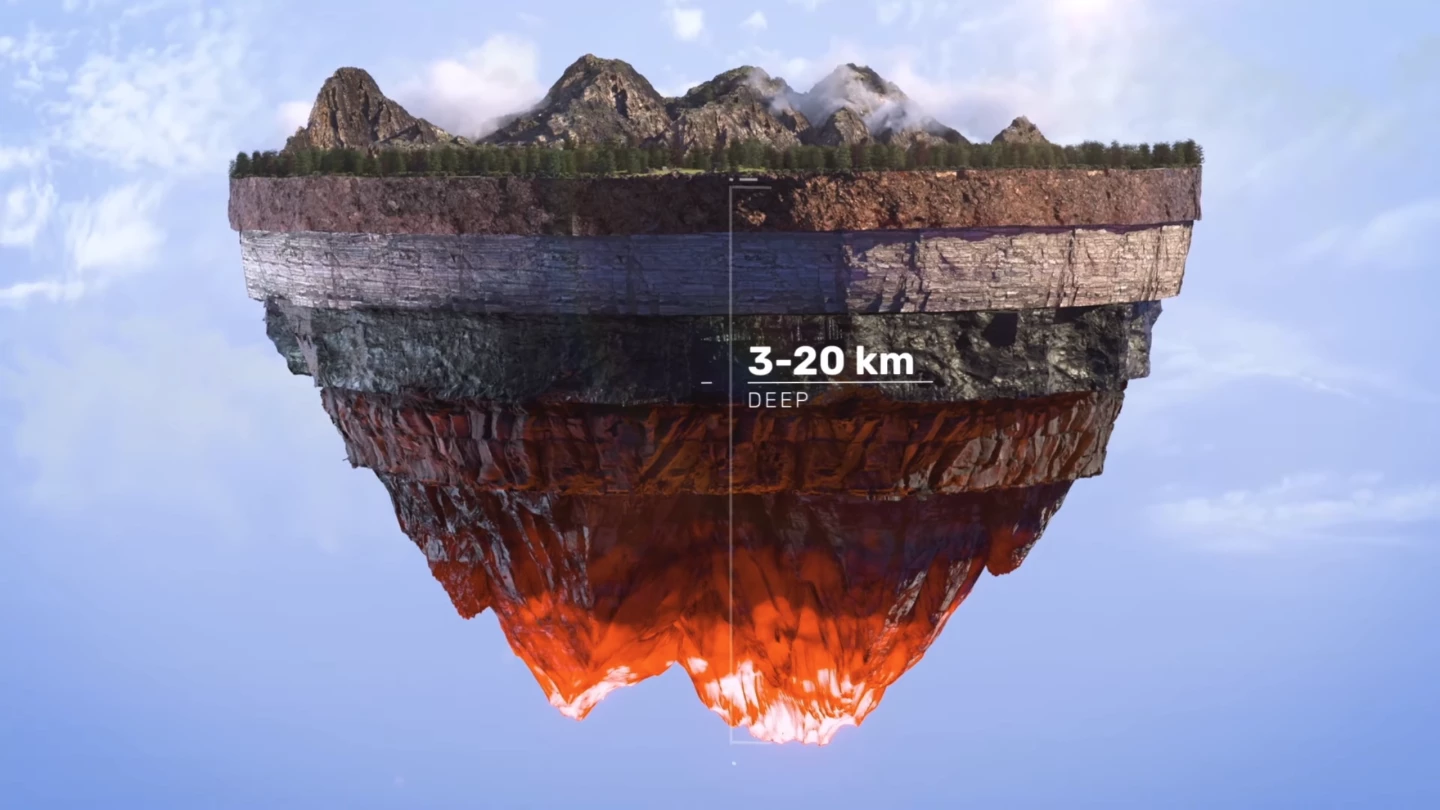
The hype for ultradeep geothermal is building, as it should be given the intermittency and energy density issues that limit the potential of other renewable energy options. However, the ability to drill 20 km into the earth’s surface with millimeter, rock-melting waves has yet to be demonstrated.

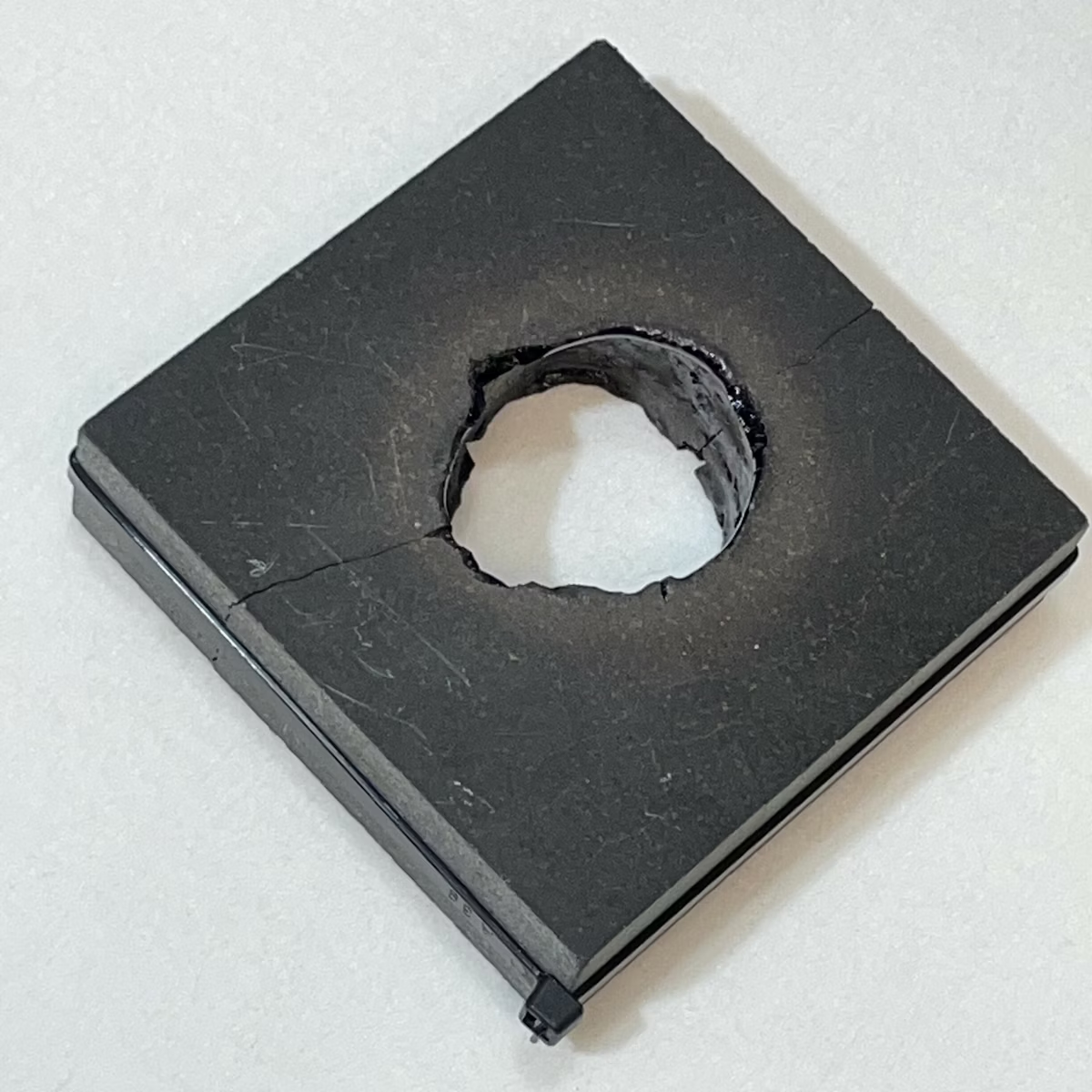
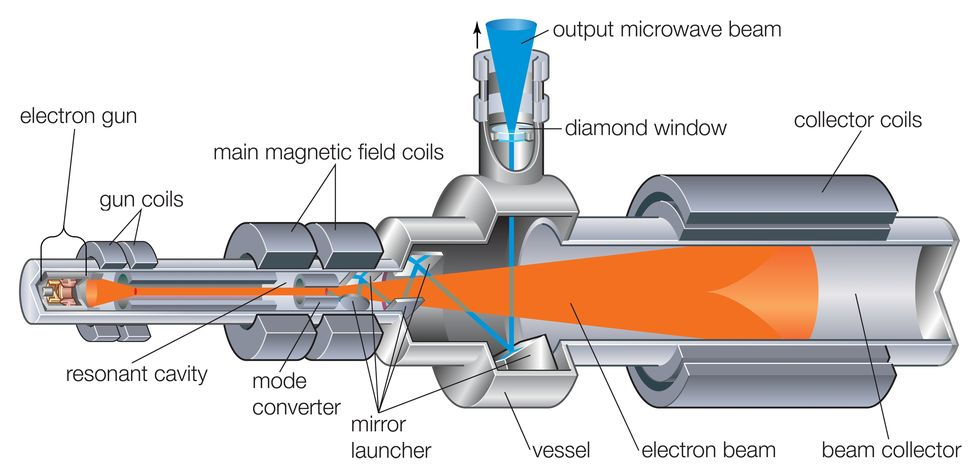
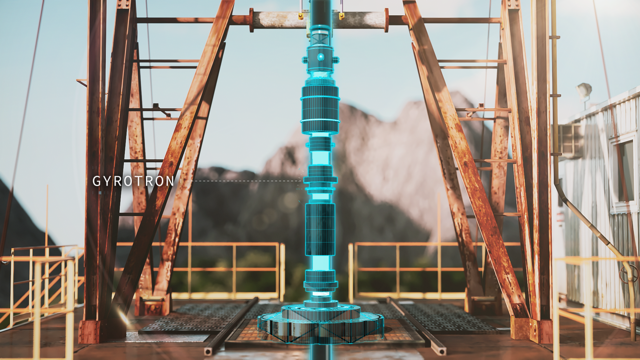
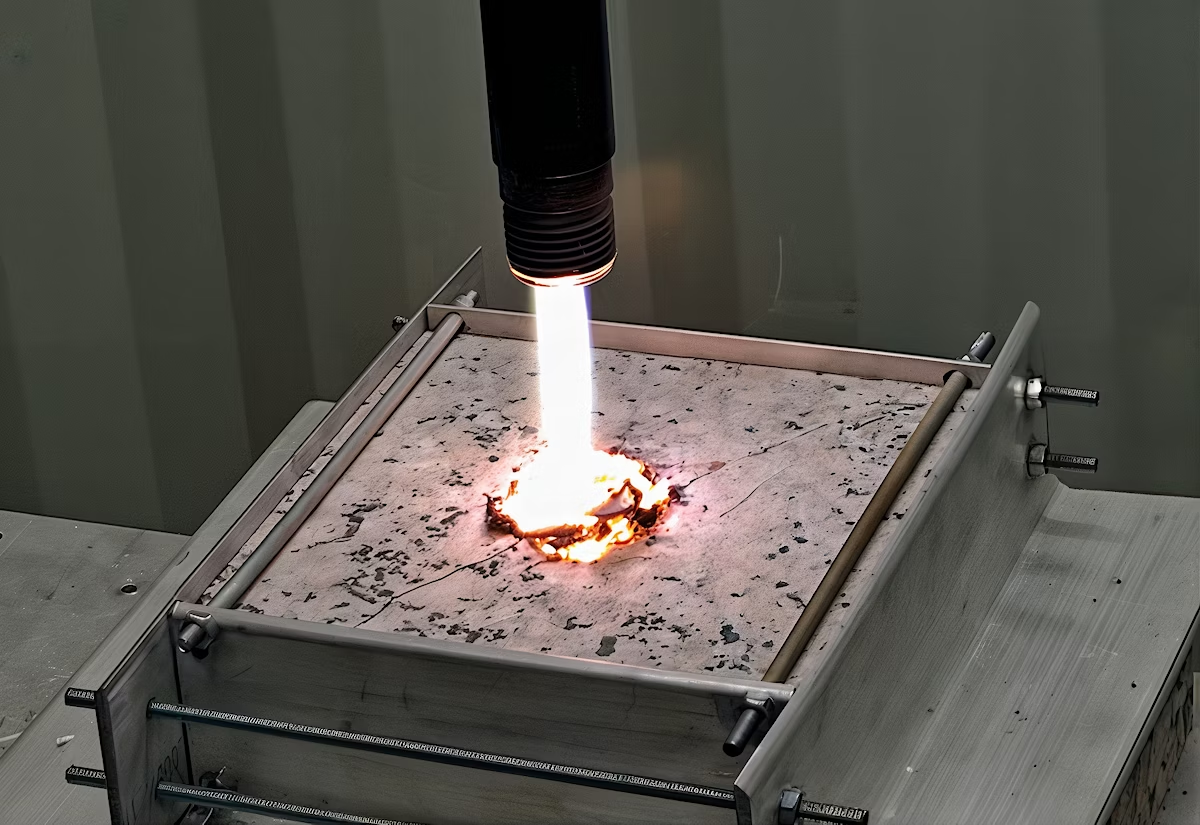
Conventional drilling technology gets you through sedimentary formations to the hard basement rock that lies below. That is where gyrotrons will be expected to vaporize rock to depths needed to tap into unlimited 900+ deg F geothermal energy. But questions regarding gyrotron reliability, hole stability, and material removal. Quaise Energy is working with DOE’s Oak Ridge lab to resolve these issues. Field tests are expected over the next few years with initial energy production in 2026. This is all very exciting, but even conventional drilling is seldom routine, so complications should be expected.

Here’s a very good video:

Thomas Vogel, Getty images.
Gyrotron, Popular Mechanics, Encyclopedia Britannica

Read Full Post »

Update on the most promising renewable energy alternative:

Quaise has received a grant from the Department of Energy to scale up Woskov’s experiments using a larger gyrotron. With the larger machine, the team hopes to vaporize a hole 10 times the depth of Woskov’s lab experiments by the end of this year. After that, the team will vaporize a hole 10 times the depth of the previous one — what co-founder Matt Houde calls a 100-to-1 hole.

“That’s something [the DOE] is particularly interested in, because they want to address the challenges posed by material removal over those greater lengths — in other words, can we show we’re fully flushing out the rock vapors?” Houde explains. “We believe the 100-to-1 test also gives us the confidence to go out and mobilize a prototype gyrotron drilling rig in the field for the first field demonstrations.”

Rather than getting deep in the weeds of carbon capture, imagine powering those existing facilities with steam generated without carbon emissions at all.

The key is that ultradeep geothermal has the power density and scalability of fossil fuels.

Read Full Post »

Quaise Energy’s ultradeep geothermal energy concept is most intriguing and media interest continues to build. Ultradeep geothermal has a big advantage over other renewable concepts which have much greater space and aesthetic challenges and suffer from intermittency. As is very well explained in the quote below, it’s now up to Quaise to demonstrate gyrotron drilling and the associated technology in pilot projects.

“A lot of the technology advances [needed] are coming into that proof step where you’ll have physical proof that they work. So I would say we are ready to launch, if we can just bring together the right utility, the right contract and engineering expertise, and the right site to launch the proofs to show that this can be done,” said Ken Wisian, a geothermal geophysicist and associate director of the Bureau of Economic Geology at the University of Texas, Austin. “The picture could be accelerating dramatically over the next few years. We just need the proof projects to land.”

altenergymag.com

Read Full Post »

MIT Press

For others who are fascinated by ultradeep geothermal energy, MIT News has posted an update on Quaise Energy. Quaise wants to use x-rays to drill ultradeep geothermal wells at old coal and gas power plants.

“The company plans to vaporize enough rock to create the world’s deepest holes and harvest geothermal energy at a scale that could satisfy human energy consumption for millions of years. They haven’t yet solved all the related engineering challenges, but Quaise’s founders have set an ambitious timeline to begin harvesting energy from a pilot well by 2026.”

Quaise will use conventional rotary drilling technology to reach basement formations before switching to high-power millimeter waves that vaporize boreholes through rock and provide access to deep geothermal heat. See our previous post on this exciting concept.

Read Full Post »

Wind and solar energy are likely to continue growing in importance over the next several decades, but massive space requirements and intermittency may prevent these energy sources from ever being dominant. On the other hand, geothermal power could prove to be the ultimate energy solution if we can effectively drill deep beneath the surface and tap into superheated rock.

Quaise Energy, headed by ex-Schlumberger/MIT engineer Carlos Araque, is developing a radical new approach to ultra-deep drilling. Quaise will use conventional rotary drilling technology to reach basement formations before switching to high-power millimeter waves that vaporize boreholes through rock and provide access to deep geothermal heat. Quaise’s timeline calls for operation of their first full-scale hybrid drilling rig in 2024 and their first super-hot geothermal system in 2028. Those interested in energy solutions should follow their progress.

Here is Quaise’s promotional video:

Good New Atlas article

Read Full Post »

« Newer Posts