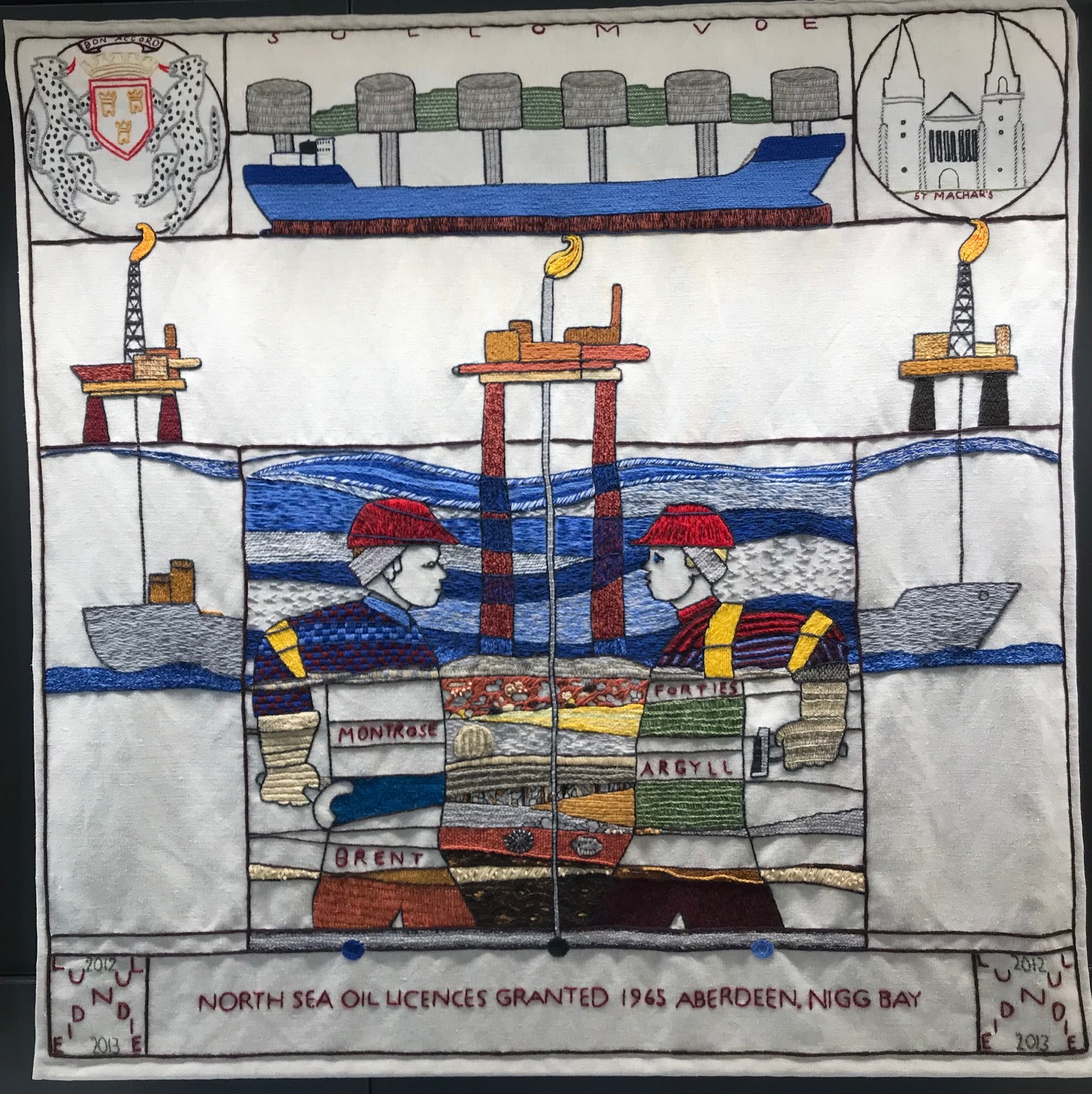
JL Daeschler, pioneering subsea engineer, artist, resident of Scotland, and BOE contributor, visited The Great Tapestry of Scotland exhibition in Galashiels. He shared this image of a tapestry tribute to North Sea workers.
JL reports that the Great Tapestry is 143 m long, and that more than 1000 people worked 50,000+ hours on the various historical panels!
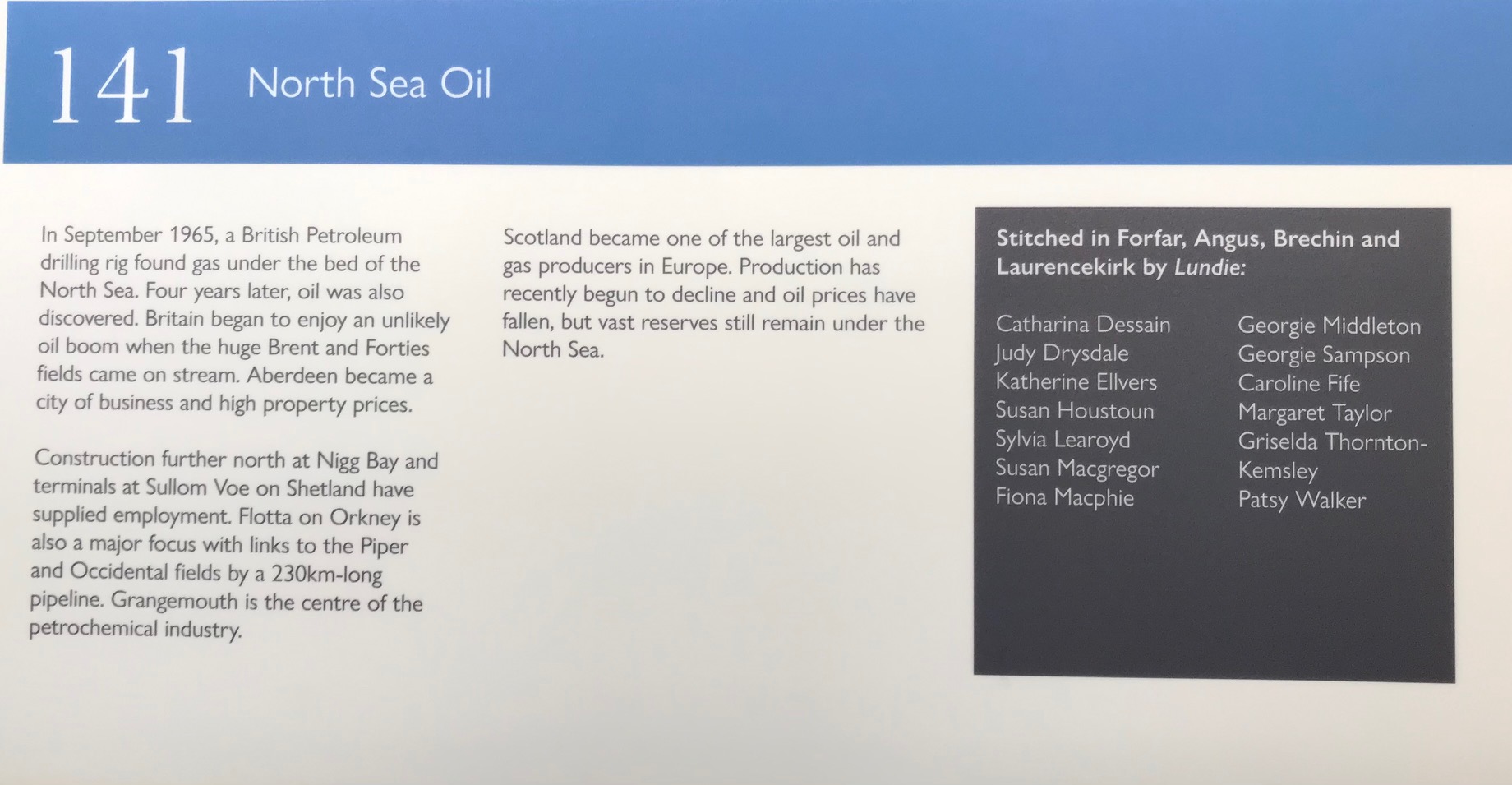
Beneath the North Sea oil panel is some historical information and the names of those who did the stitching:
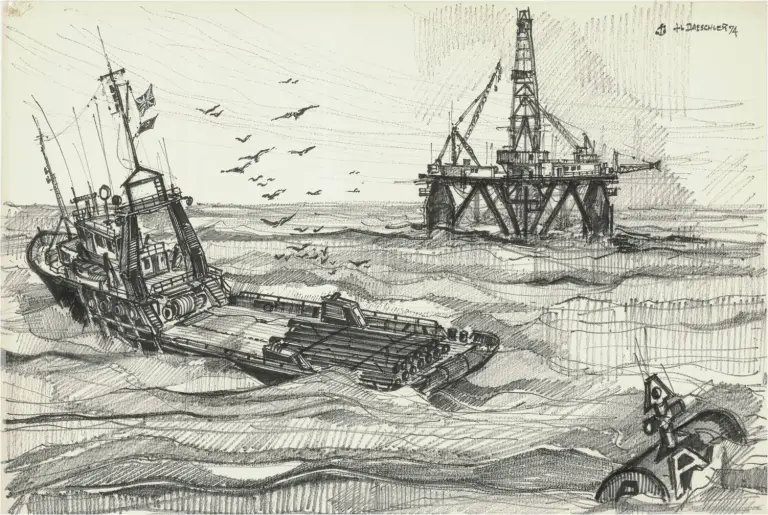
JL Daeschler, pioneering subsea engineer, outstanding artist, and BOE contributor, lives in Scotland. He shared these concerns about the state of the UK offshore industry:
Since projects have been shelved, contractors have left the country – so no drill rigs, no exploration, no pipelines, and no crane barges. The list of disciplines put out of work is far longer. The big international operators have left looking for better opportunities overseas with milder environments and cheaper manpower support. Air travel, modern communication systems, and immediate electronic access to information and support facilitate operations anywhere in the world. So what is left in the UK sector of the North Sea are the few installations running towards the end of production. Their years are numbered. The North Sea could have had a sustainable greener and safer project profile if the momentum had been kept. It’s like an oil & gas pandemic, except you do not work from home if you operate rigs and vessels. No research, no strategy, and no money !!!
Juergen Maier, chairman of GB Energy, “a planned British government-owned renewable energy investment body,” is promising to revive Aberdeen with “green energy” jobs, and to create “something special for the years ahead.”
Maier: “Floating offshore wind, green hydrogen, and carbon capture should be as synonymous with Aberdeen’s future as oil and gas have been with its past.” This is an interesting comment given that the success of the industries he is promoting is far from assured; nor is the continuation of government edicts and subsidies on which they are dependent.
How many times have we been told that the government driven energy transition would create thousands of jobs? How many workers in economically important industries have been told to transition to politically favored professions? How many Keystone Pipeline workers found the promised “green energy jobs?” Why were coal miners condescendingly told to “learn to code?”
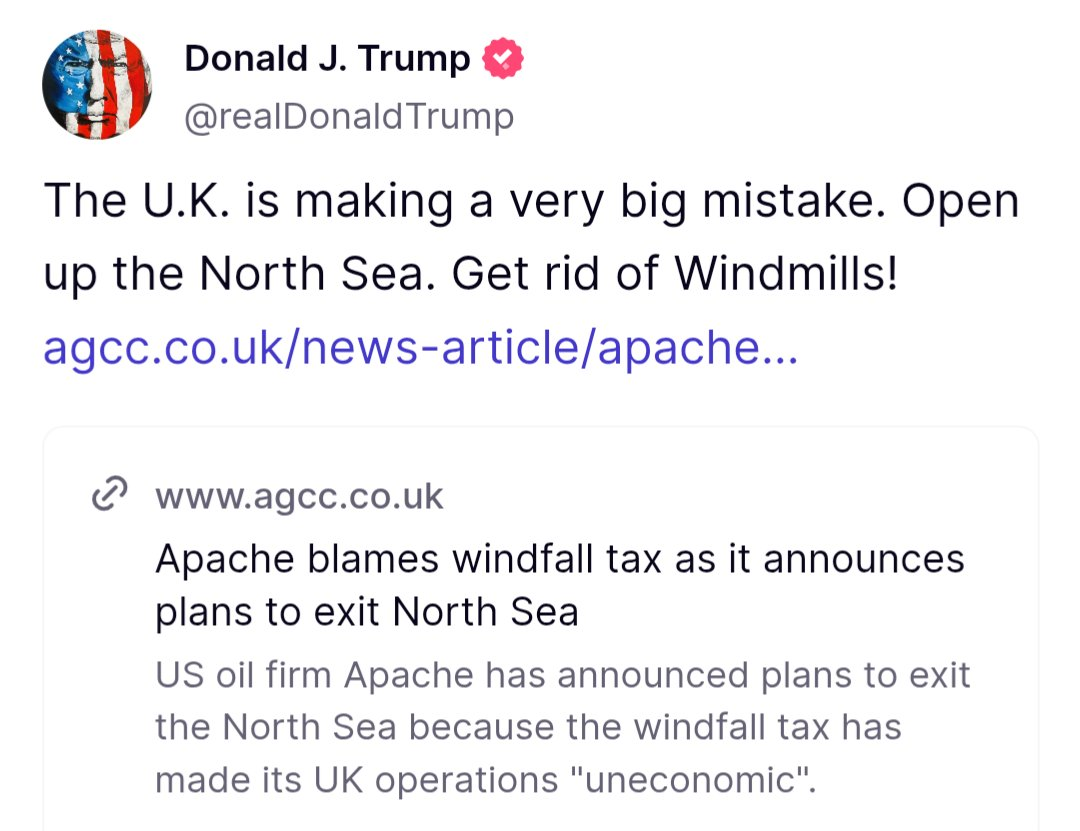
“We need more of it because even the most ardent supporters of renewable energy, the most vocal proponents of net zero, quietly admit oil and, especially, gas will be needed for a couple of decades at least. That obvious truth, that inarguable necessity, is not, apparently, enough for ministers to encourage UK production, however, or temper their rhetoric around renewables.“
“Allowing our rigs and refineries to power down and relying on other countries to keep the lights on still seems a little, well, counter-intuitive. We will import oil and gas but not produce it while happily exporting contracts, skills and jobs overseas? The practical impact of Labour’s refusal to grant new exploration licences in the North Sea might remain unclear but the message it sent was absolutely crystal.“
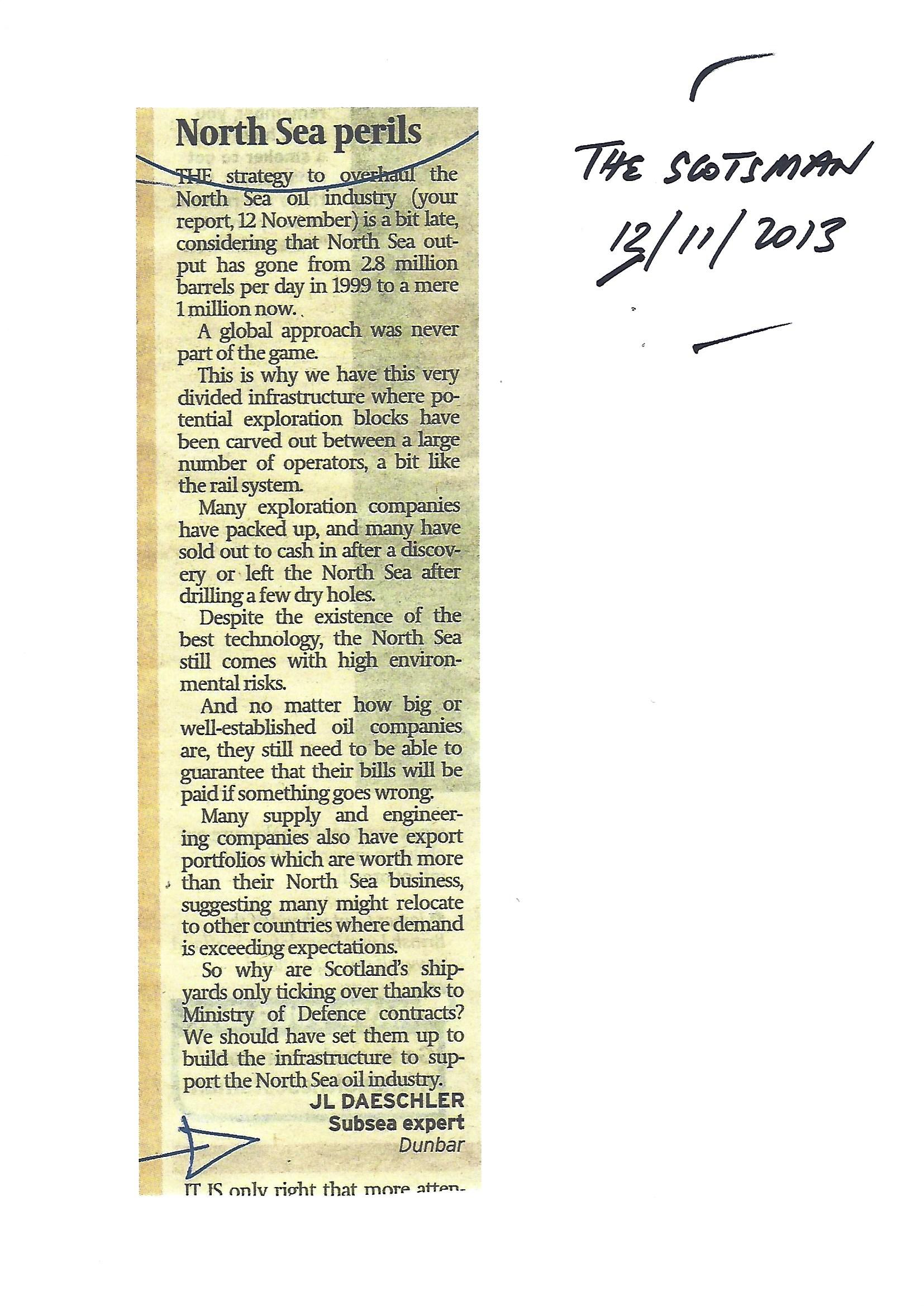
JL Daeschler, a BOE contributor, subsea engineer, and resident of Scotland, warned 11 years ago (see clip below) about the demise of North Sea infrastructure and the exit of important companies. JL now comments as follows:
“We have unfortunately taken down all the support facilities needed to conduct a complete offshore sequence – finding, engineering, and producing – even under a more favorable tax climate. We will have to call on Norway to do anything!”


 Bud's Offshore Energy (BOE)