The Santa Barbara County Board of Supervisors voted 3-2 to proceed with developing a new ordinance that will ban new and operating oil and gas wells in the County.
In essence, the 3 Supervisors from South County (Districts 1-3) voted to euthanize an industry that is largely in North County (Districts 4 and 5). Those 3 supervisors, not the marketplace, are terminating a historically important industry. See the maps below.
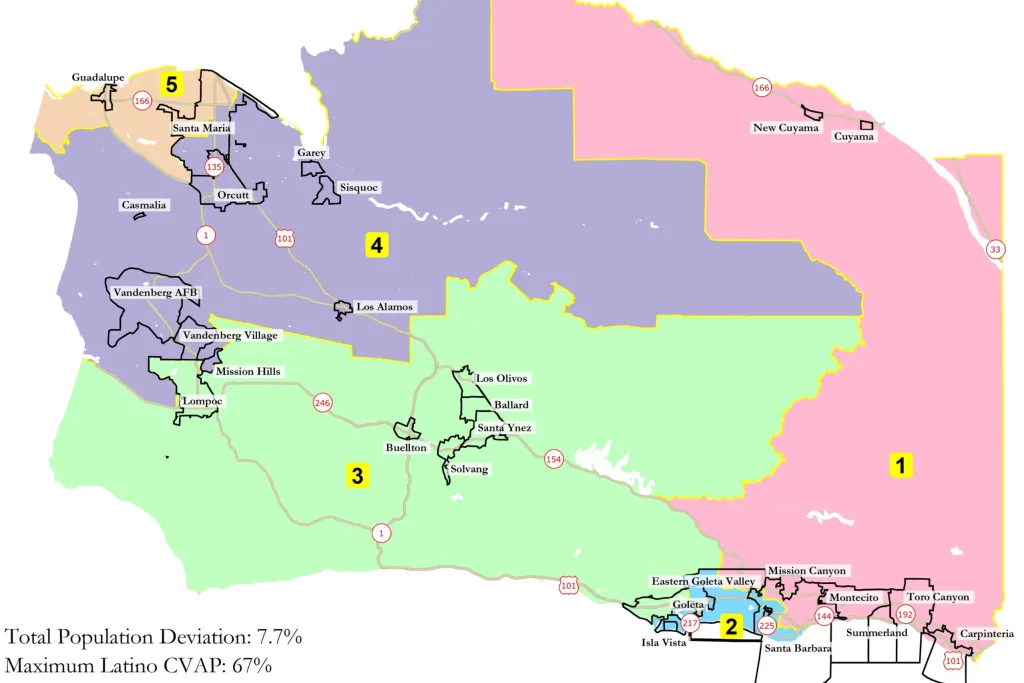
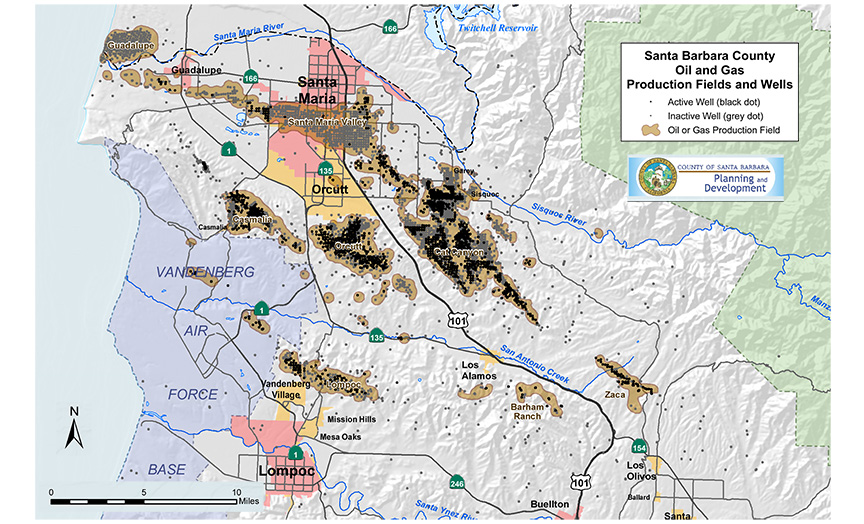
Supervisors Laura Capps of the Second District, Joan Hartmann of the Third District and Roy Lee of the First District voted for the ordinance.
Supervisor Steve Lavagnino of the Fifth District, where I once lived, correctly noted that the North County only has two industries that allow people to support themselves well after high school: agriculture, and oil and gas.
Ah, but it’s the industry’s fault according to Supervisor Hartmann. She asserted that companies have known since the 1950s about the dangers of climate change, and could have led the way to be part of the solution. How dare they respond to market forces instead of climate ideologues!
Of course, this is the same three vote coalition that is aligned with the Coastal Commission in opposition to the restart of the Santa Ynez Unit, which would benefit the County significantly.
Finally, note that the three supervisors voting for the ordinance represent the districts with the highest income levels and lowest poverty rates. Those opposing the ordinance represent the districts that will be most affected, and have the lowest income levels and highest poverty rates. (See the table below; Information courtesy of Grok AI.)
| District | Approx. Median Household Income (2022) | Key Areas Included | Notes |
| 1 | $120,000–$140,000 | Carpinteria, Summerland, Montecito, parts of Santa Barbara | Affluent coastal communities; high home values (~$1.5M+ median) |
| 2 | $95,000–$115,000 | Santa Barbara city, Goleta, Isla Vista | Mix of urban professionals, students, and tech; university influence lowers median slightly. |
| 3 | $80,000-$95,000 | Santa Ynez Valley, Buellton, Solvang, Lompoc | Rural/agricultural with tourism; moderate incomes from wine industry and military base |
| 4 | $70,000–$85,000 | Lompoc, Vandenberg area, parts of Santa Maria | industrial and defense-related; higher poverty rates (~15–20%). |
| 5 | $60,000–$75,000 | Santa Maria, Guadalupe | Agricultural North County; majority Latino population; lowest incomes due to farm labor. |
Poverty rates: ~8–10% in Districts 1–2 vs. 18–25% in Districts 4–5
 Bud's Offshore Energy (BOE)