On August 11, 2025, TMC USA received notice of full compliance from the National Oceanic and Atmospheric Administration (NOAA) on its exploration applications, and reconfirmation that TMC USA has priority right over both exploration areas
Both applications entered the certification stage in late July, which we expect to be approximately 100 days
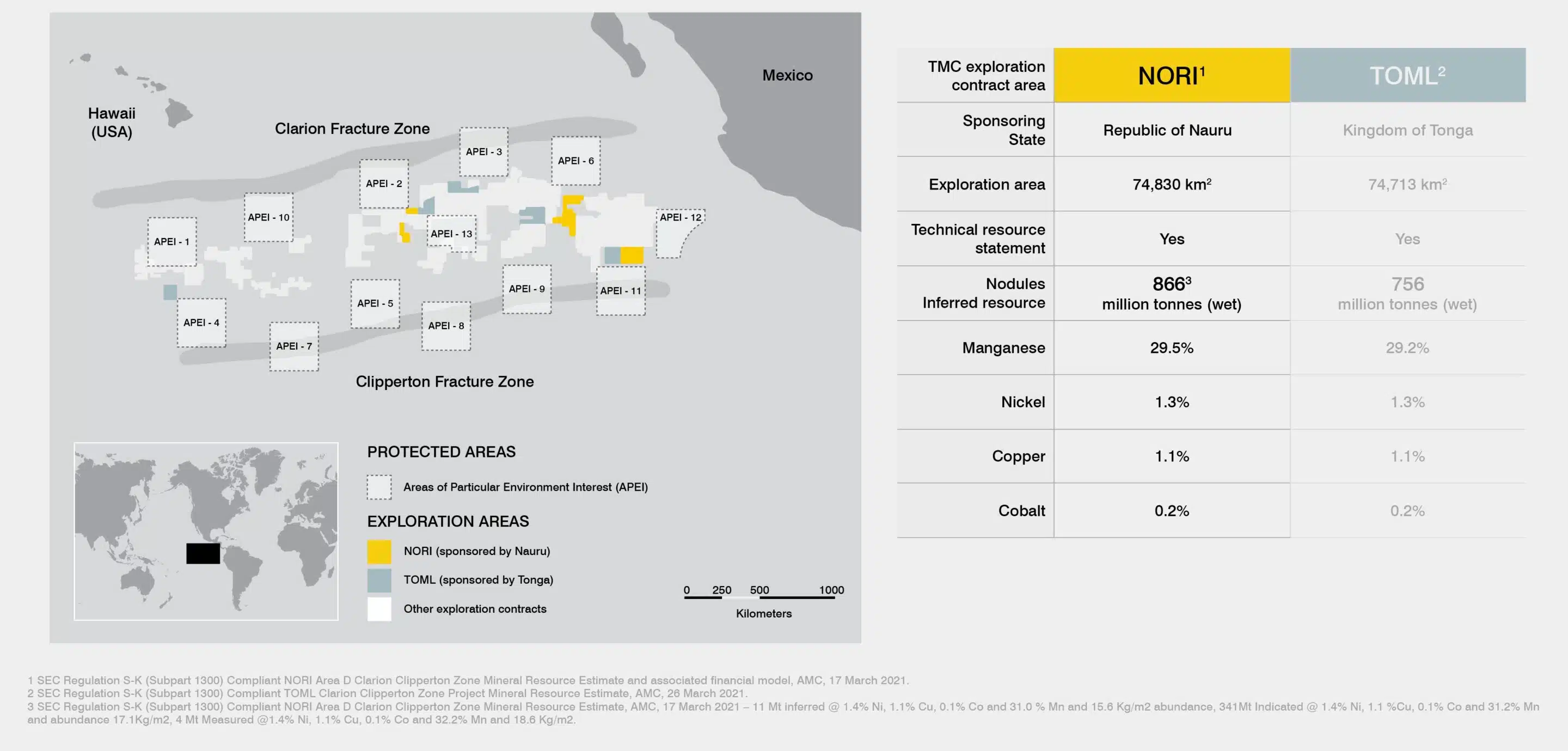
In light of recent U.S. regulatory developments, TMC expects to commence commercial production from the NORI-D Area in the fourth quarter of 2027 if we receive a commercial permit before scaling to an average annual production rate of 10.8 million tonnes of wet nodules per annum (Mtpa) at steady state (2031 through 2043) production, with an expected 18-year life of mine (LOM);
Meanwhile, after missing deadlines in 2020 and 2023, the International Seabed Authority (ISA) again failed to deliver a Mining Code as communicated in their 2023 roadmap during the second part of their 30th session in July 2025. No new roadmap or new target date for adopting the final Mining Code has been agreed. The next ISA meeting is scheduled for March 2026. (Hence the importance of direct permitting through the US/NOAA.)
Lars Herbst brought this bold and rather surprising deepsea mining development to my attention. Let the screaming begin!
NEW YORK, March 27, 2025 (GLOBE NEWSWIRE) (emphasis added) — TMC the metals company Inc. (Nasdaq: TMC) (“TMC” or the “Company”), an explorer of the world’s largest undeveloped resource of critical metals for building infrastructure, power generation, transmission, and batteries, today announced that its subsidiary The Metals Company USA LLC (“TMC USA”) has formally initiated a process with NOAA under the U.S. Department of Commerce to apply for exploration licenses and commercial recovery permits under existing U.S. legislation, the Deep Seabed Hard Mineral Resources Act of 1980 (DSHMRA).
Following extensive legal diligence on DSHMRA, NOAA’s implementing regulations and other applicable environmental protection legislation, the Company strongly believes that the U.S. seabed mining code offers the greatest probability of securing a permit for commercial recovery of deep-sea mineral resources in a timely manner.
Gerard Barron, Chairman & CEO of The Metals Company, commented: “Over the last decade, we’ve invested over half a billion dollars to understand and responsibly develop the nodule resource in our contract areas. We built the world’s largest environmental dataset on the CCZ, carefully designed and tested an offshore collection system that minimizes the environmental impacts and followed every step required by the International Seabed Authority. But, despite collaborating in good faith with the ISA for over a decade, it has not yet adopted the Regulations on the Exploitation of Mineral Resources in the Area in breach of its express treaty obligations under UNCLOS and the 1994 Agreement.”
“We believe we have sufficient knowledge to get started and prove we can manage environmental risks. What we need is a regulator with a robust regulatory regime, and who is willing to give our application a fair hearing. That’s why we’ve formally initiated the process of applying for licenses and permits under the existing U.S. seabed mining code. After extensive legal review and constructive engagement with NOAA and other officials across the U.S. government, we believe the United States offers a stable, transparent, and enforceable regulatory path. TMC USA expects to submit applications to NOAA in the second quarter of 2025. We’re encouraged by the growing recognition in Washington that nodules represent a strategic opportunity for America—and we’re moving forward with urgency.”
Mining’s larger future will rest largely on how ISA (the International Seabed Authority) finalizes its rule book amid the rush to scour the seafloor. ISA has arare chance to regulate an industry before the industry has begun.
Thoughts:
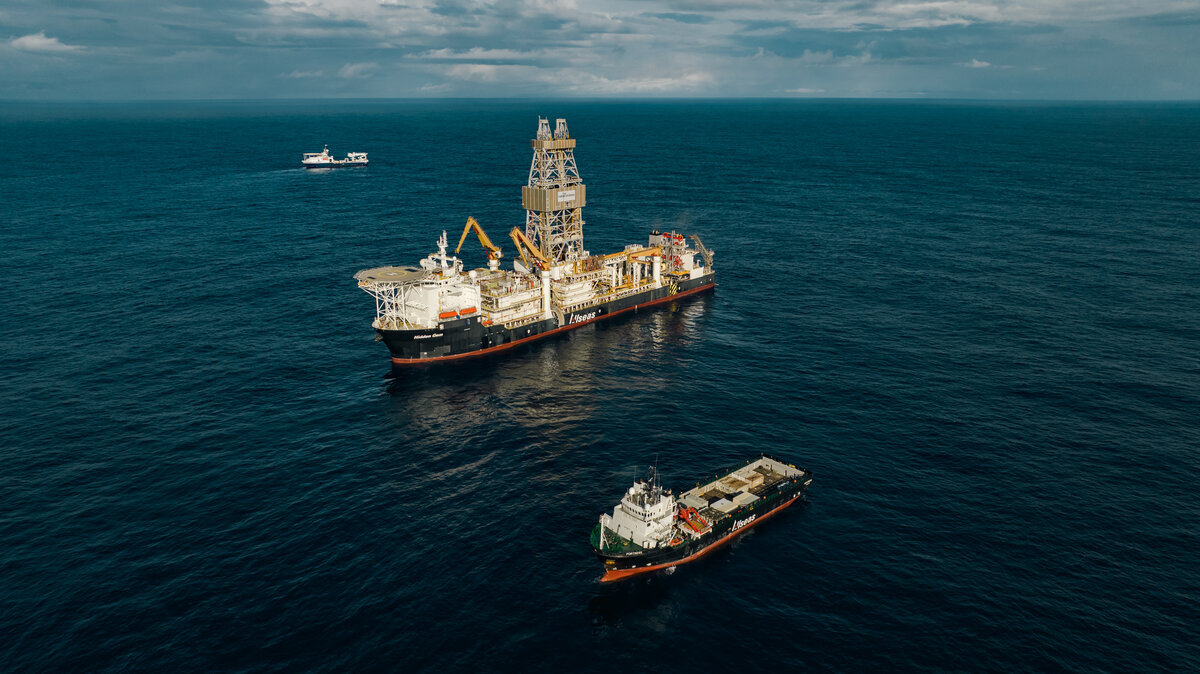
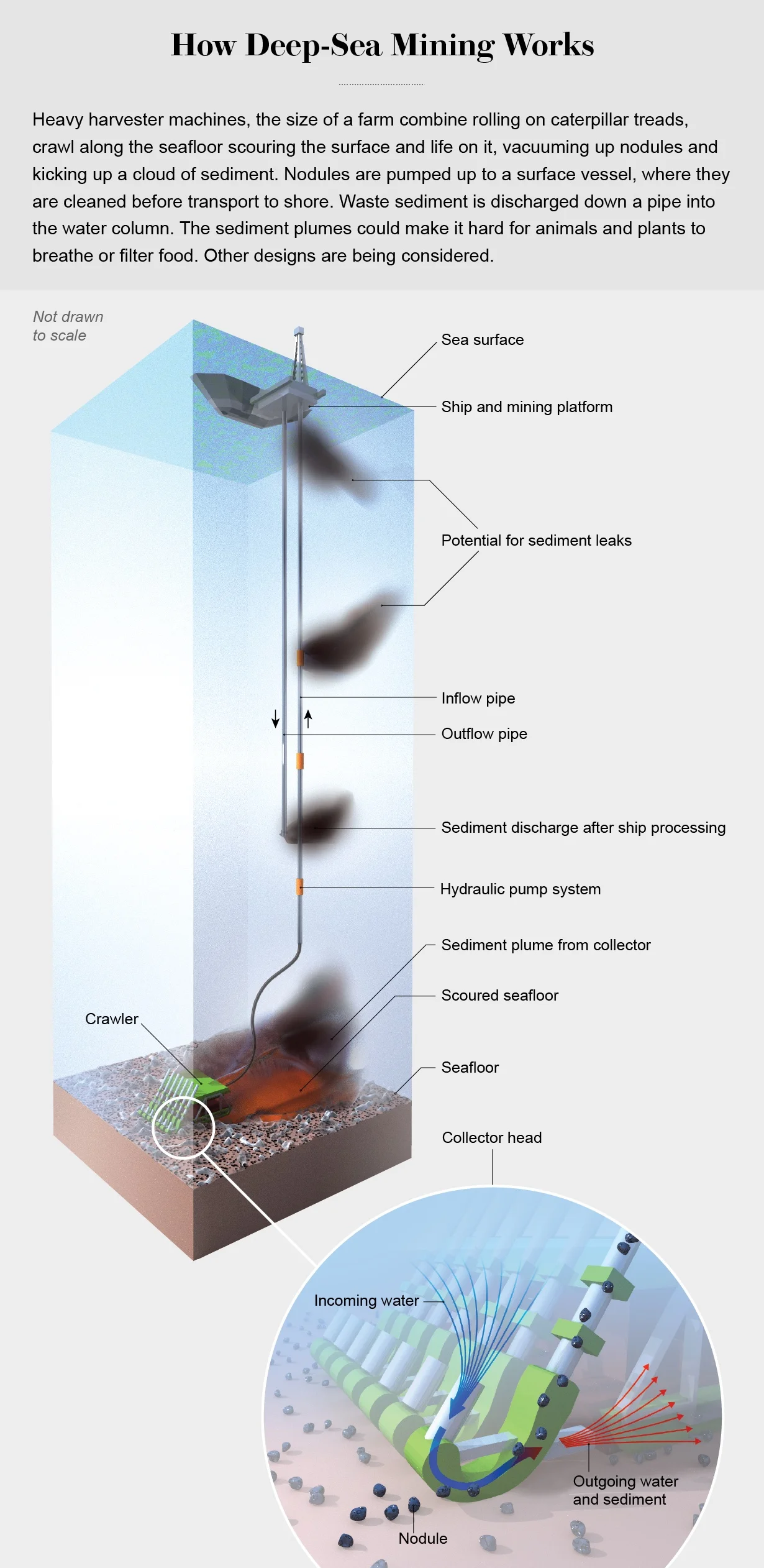
Deep sea mining is not an entirely new industry. The technology and procedures evolved from other industries, most notably deepwater drilling, and from decades of ocean exploration. Keep in mind that the Hidden Gem mining vessel is a converted deepwater drillship.
The offshore oil and gas industry’s risk assessment and safety management practices can be adapted to deep-sea mining.
Effective regulations are not static. The deep-sea mining regulations should not be considered “final” when they are blessed by ISA and the governing body.
The more prescriptive elements of regulations are dependent on operational experience, observations, and performance data. These must evolve over time.
Timely revisions to equipment and procedural requirements through updates to operator management systems and industry standards are critical. In most cases, formally revising regulations takes much too long and is an ineffective means of mitigating emerging risks.
Long, detailed regulations are indicative of a weak regulatory regime, not a strong one. Optimal regulations specify goals, not methods, and are implemented by focused regulators who inquire, challenge, analyze, and where necessary penalize.
The respective roles of the operating companies and the regulating authority must be clearly articulated.
With continuous improvement as the primary objective, the regulator should develop a strategy for measuring safety and environmental performance.
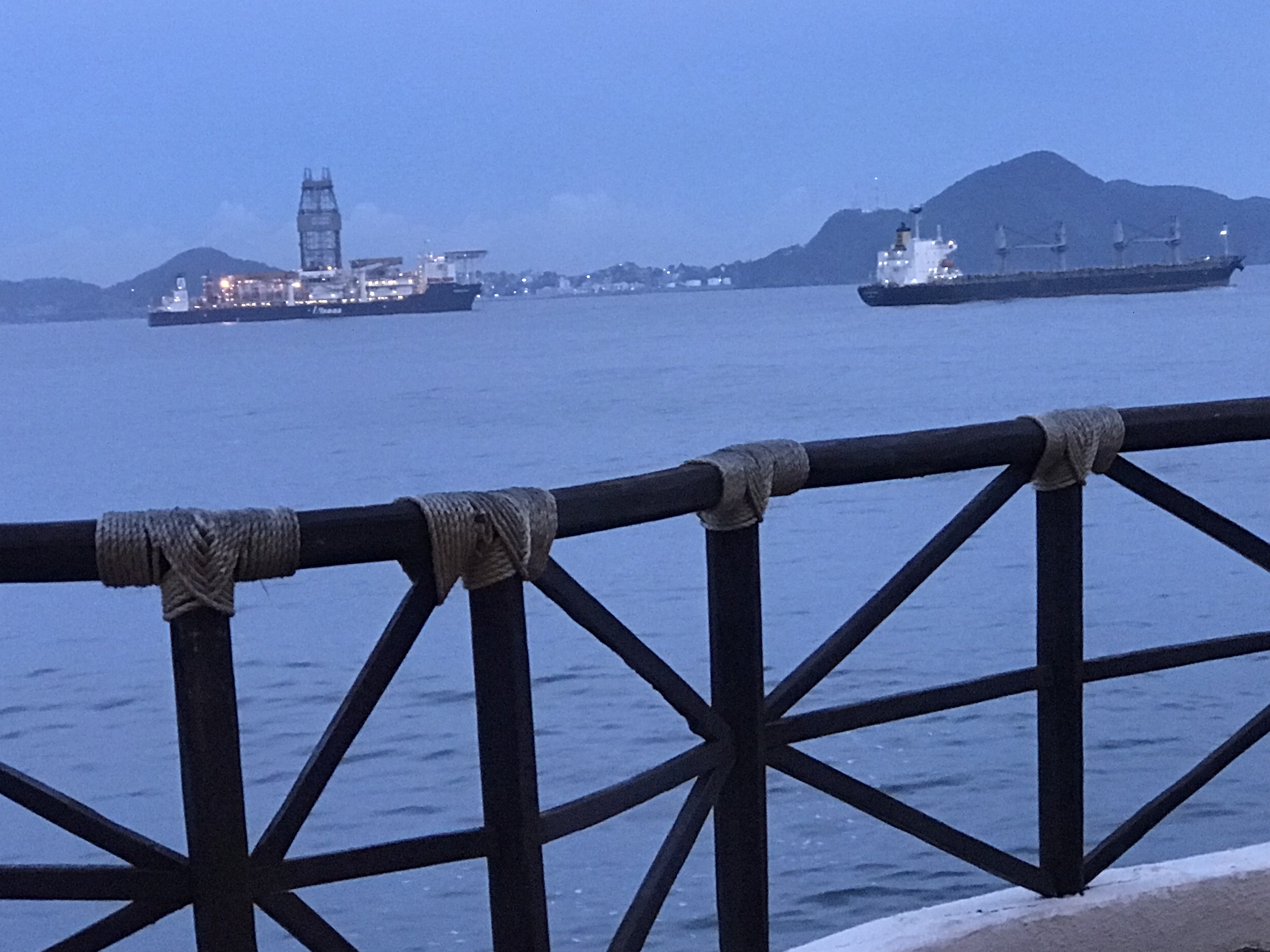
Andrew Konczvald’s reports from Manzanillo, Mexico about the presence of the Hidden Gem (pictured above), a converted deepwater drillship, have renewed BOE interest in deep sea mining, a topic that is full of political, environmental, legal, and operational intrigue:
Ocean mining has served as cover for a CIA mission! The Glomar Explorer was built by Howard Hughes to recover a Russian submarine beneath 16,500′ of water in the Pacific. Interestingly, some manganese, the material the Glomar Explorer was supposedly researching, was also recovered. (As a young engineer, I read fascinating trade journal articles about the Glomar Explorer and its mining capabilities. Little did I know that it was all a ruse!)
The US is not a party to the UN Law of the Seas (UNCLOS) Convention under which the International Seabed Authority (ISA) was established in 1994 to oversee deep sea mining. Purportedly, the US is reluctant to cede any high seas authority to the UN. Doing so might preclude escapades like the recovery of the Russian submarine 😉
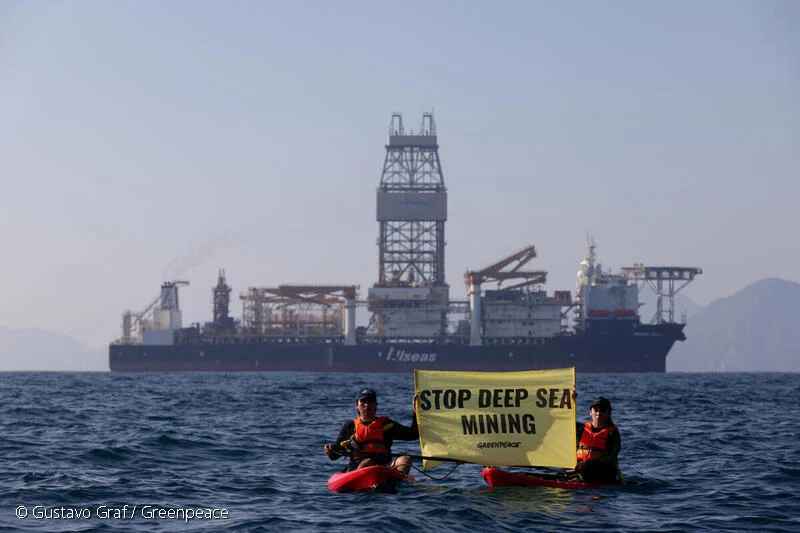
Despite the need for metals to support their electrification goals, some environmental groups are staunchly opposed to deep sea mining. Their concerns range from disturbing the ocean’s natural carbon sink to impacts associated with noise and pollution from mineral recovery and transportation.
TMC contends that the environmental impacts and social costs associated with deep sea mining are far less than for onshore mining.
Meanwhile the Hidden Gem remains parked near Manzanillo. Stay tuned.



 Bud's Offshore Energy (BOE)