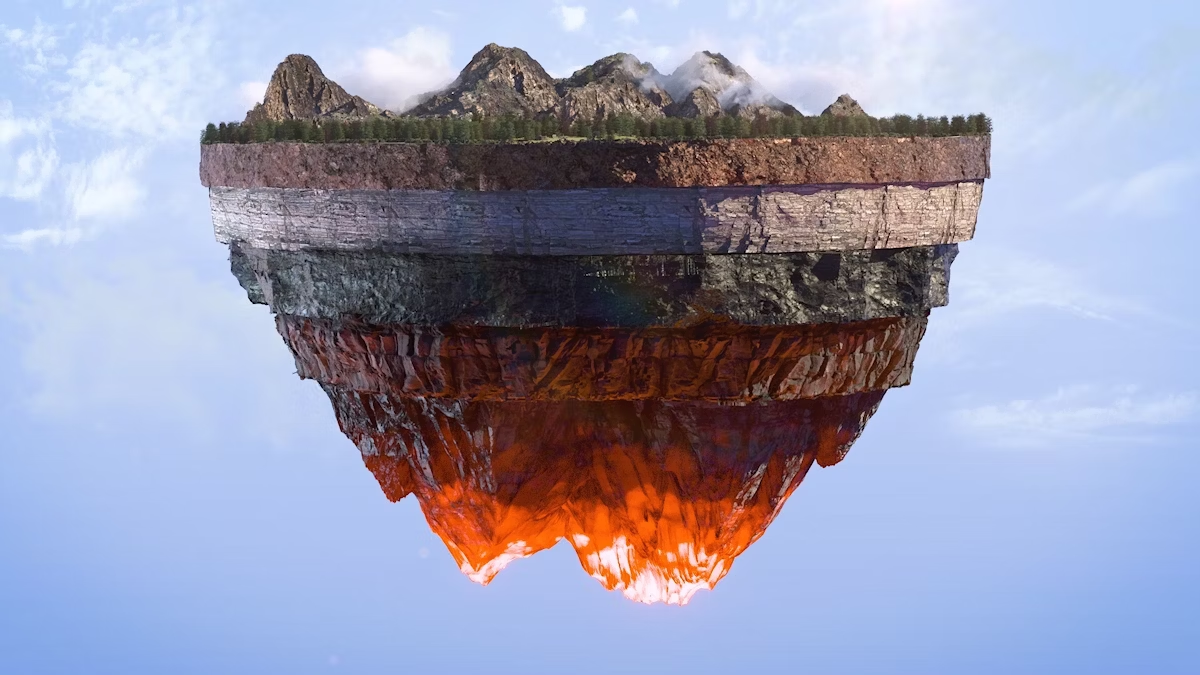
Ultra-deep geothermal is arguably the renewable energy resource with the greatest long term potential. It is accessible everywhere, can replace thermal energy sources at existing power plants, and isn’t handicapped by the intermittency, space preemption, aesthetic, and wildlife protection challenges inherent in wind and solar development.
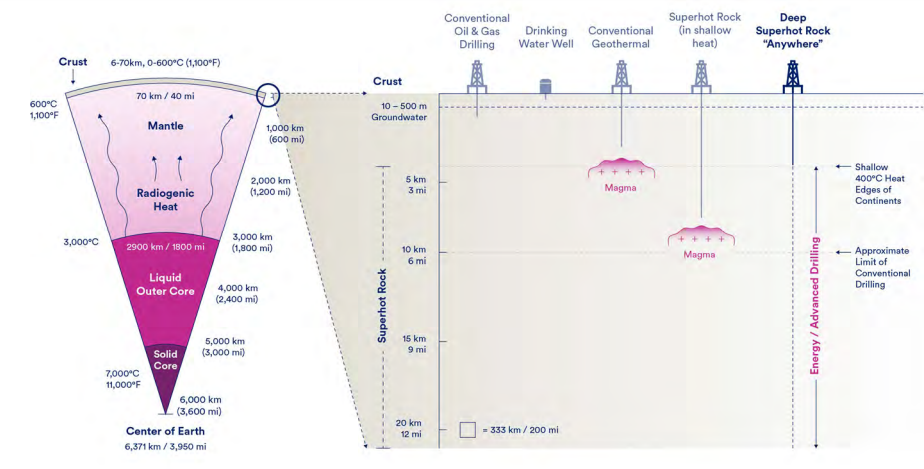
A new study found that rock that fractures at superhot conditions (see diagram above) can be ten times more permeable than rock that fractures at conditions closer to the Earth’s surface, and can also deform more readily.
Why is this important?
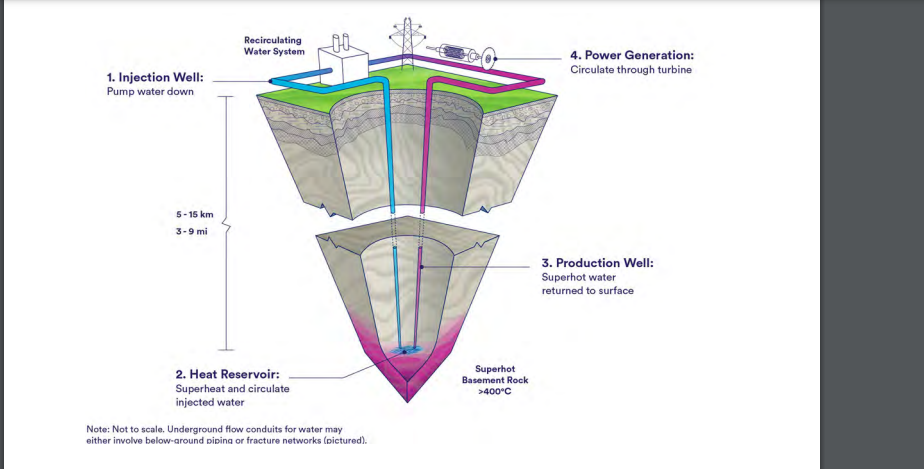
- More water can pass through fractures and become supercritical (see diagram below)
- Supercritical water “can penetrate fractures faster and more easily and can carry far more energy per well to the surface—roughly five to ten times the energy produced by today’s commercial geothermal wells.”
- The research confirms theoretical work reported earlier this year showing that the cracks that form create a dense “cloud of permeability” throughout the affected rock.
The next big step for ultra-deep geothermal is demonstrating the technology to efficiently drill wells to depths of ~20 km. In that regard, we are awaiting Quaise Energy’s field test of their gyrotron drilling system.
 Bud's Offshore Energy (BOE)